
[ad_1]
You were recently appointed Associate Professor in the Department of Art and Art History at the University of Malta. You are well known for your curatorial work, especially at The Phoenicia Malta. Is there a guiding philosophy or question that shapes your curatorial practice?
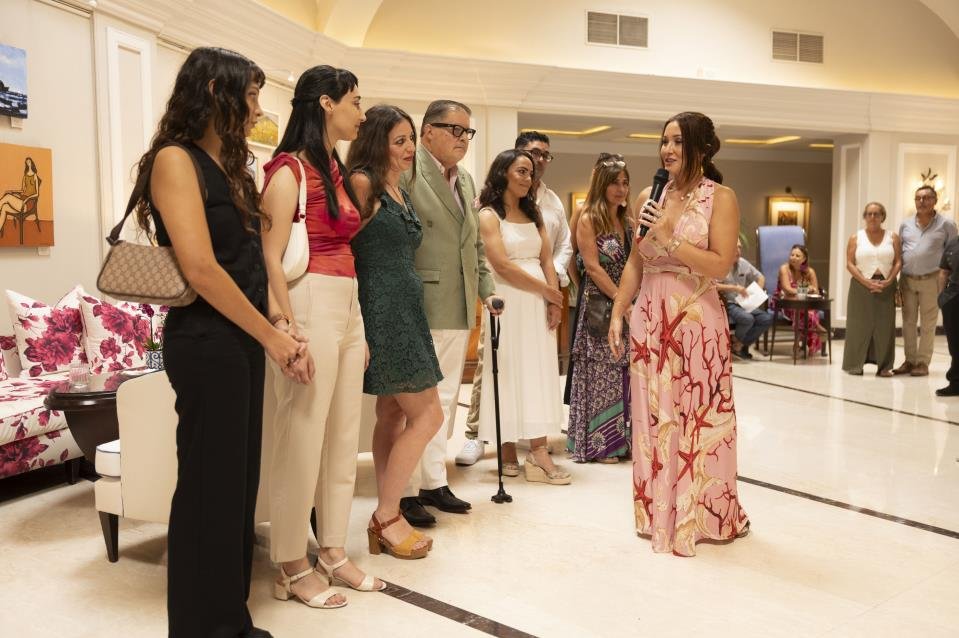
What drives me is the artist’s passion and the story they are telling, underpinned by a commitment to quality and originality. For me, the work must merit exhibition on its own terms, yet it should also contribute something distinctive to our cultural conversation. This is why I particularly enjoy showcasing emerging talent, such as in the current collective exhibition at The Phoenicia Malta, A Sense of Place, where three recent graduates from the University of Malta’s Fine Arts Programme exhibit alongside established artists. Their presence is not only a valuable boost to the start of their careers, but a powerful demonstration of how seamlessly their work dialogues with that of more seasoned practitioners.
What does being a curator really entail? Can you walk us through your process from idea to opening night?
Being a curator is both an imaginative and logistical craft. It begins with meeting the artist to understand their vision, concept, and purpose. We explore how best to translate their ideas into a coherent public presentation. From there, I distill that vision into accessible – and yet layered – language for didactics, press materials, posters, and social media. My goal is always to preserve the idea’s richness while enabling broad engagement. By opening night, I am prepared to present a speech that introduces the exhibition and anticipates the audience’s questions, bridging the artist’s intent with the visitor’s experience.
Have you ever curated a show that sparked unexpected public reactions or conversations?
Curating teaches humility: one can believe deeply in an artwork’s power, yet it may not resonate immediately with every viewer. However, I do believe taste and appreciation grow through exposure and dialogue. It’s fascinating to observe how certain works speak more to one audience than another – whether Maltese, French, or beyond – and how those differences spark the most illuminating conversations. Navigating that diversity of reception, while remaining true to the artist’s vision, is both the challenge and the joy of the role.
How do you see the role of curators evolving in the next decade?
Art today embraces ever more diverse and conceptual approaches and materials, requiring curators to combine deeper scholarly research with inventive strategies for display and interpretation. In Malta, increased participation in international biennales adds layers of complexity, from logistics and transport to compliance with cross‑border regulations – challenges rare to local exhibitions. Future curators must be equally fluent in artistic ideas and international logistics.
Are there dream exhibitions you haven‘t yet had the chance to create?
Every exhibition is a privilege, yet one that I have long envisioned is now becoming reality: an exhibition with celebrity photographer Lorenzo Agius, opening on 12 September at Spazju Kreattiv. It is especially rewarding to see a concept I have nurtured finally come into being.
Is there any particular exhibition you are proud of? Why?
I remain deeply proud of the Alfred Chircop retrospective I co-curated with Dr Mark Sagona and Dr Christian Attard at Spazju Kreattiv (September-November 2024). As a trustee of the Alfred Chircop Trust and a personal acquaintance of Alfred, it was a profound responsibility to honour his legacy. I hope he would be proud of the care and attention that shaped that exhibition.
At The Phoenicia Malta, too, I take great pride in the ongoing monthly exhibition series, which offers a platform for artists to engage with a diverse audience – whether guests, professionals or locals – fostering lively dialogue between emerging and established practices. No two shows are the same, and each presents unique challenges, all of which I relish resolving – always in close collaboration with my trusted partner, Noella Micallef.
Who or what has influenced your curatorial style the most?
Many visits to major museum exhibitions have shaped my curatorial sensibilities; each an education in art and spatial narrative: the placement of works, wall hues, lighting, and texts all matter. Most memorable was David Hockney 25 at the Fondation Louis Vuitton in Paris this July – a vibrant, celebratory retrospective. Equally unforgettable – on a more intimate scale was, Edvard Munch: Portraits at the National Portrait Gallery in London last June; it was magical and deeply revelatory of Munch’s modus operandi.
What advice would you give to someone aspiring to become a curator?
Immerse yourself in the world of exhibitions – locally and internationally – and absorb the myriad curatorial languages, forms, and atmospheres. Read broadly – art history, literature, theory, biography, fiction: to sharpen your critical and narrative sensibility. Simultaneously, seek practical experience – internships, volunteer roles, or assistantships in galleries or museums – to acquire essential know-how in both handling work and curatorial procedure, while building professional relationships. The world is your oyster.
What‘s the most surprising or moving piece you‘ve ever included in an exhibition?
One of the most moving works I’ve curated was Alfred Chircop’s final piece, discovered on his easel upon his passing and displayed in the retrospective held in his honour. Signed in a tremulous hand, marked with a note on the back, and begun to be framed – yet unfinished – it was a fragile, intimate artwork. Including this work was powerful: a poignant testament to his final act of creation, suspended between completion and farewell.
Can you comment on the collective exhibition ‘A Sense of Place’ taking place at The Phoenicia until the end of this month?
A Sense of Place has transformed The Phoenicia’s Palm Court Lounge into a richly evocative space throughout August, with free admission until 31 August. The exhibition gathers 10 artists, ranging from established names like Kenneth Zammit Tabona, Peter Quinn, Andrew Diacono, Henry Falzon and Johanna Wells Barthet, to emerging voices such as Marlene Gouder and Mariam De Giorgio. Significantly, three recent graduates from the University of Malta’s Fine Arts programme – Kathrine Maj, Emma Incorvaja and Mireille Vella – bring fresh perspectives that resonate alongside those of seasoned artists. Under the broad yet unifying theme of “place”, the works encompass representations of memory, physical and imagined spaces – from a nostalgic café to Mediterranean light – drawing viewers into reflective dialogues on identity and environment. This exhibition is more than an honour for emerging artists – it is a testament to the dynamic interplay of generational voices defining the Maltese art scene today.
[ad_2]
Source link

No Comment! Be the first one.