
[ad_1]
At the Dr Bhau Daji Lad Museum, Mumbai, you can see the visual of an intricate bas relief created for New India Assurance Building by sculp tor N.G. Pansare between 1935-37. The structure was designed by Master, Sathe and Bhuta, an architectural firm established in 1932 that brought a unique indigenous touch to Art Deco in Mumbai. The bas relief murals they commissioned were replete with imagery of farmers and the working class.
Near this is a sketch of a residence by Henry Hohouser, an architect in Miami, Florida, known for his Art Deco-style buildings in the 1930s, featuring stepped rooflines, curved edges, “eyebrows” on windows, and the use of neon. These images, part of the show Ocean Drive to Marine Drive: Mapping a Century of Art Deco, highlight the architectural kinship between two cities, Mumbai and Miami, which have the largest collection of Art Deco-style buildings in the world. It also brings to the fore efforts of architects, artists and planners from the two cities such as Perin J. Mistry and Barbara Baer Capitman in the evolution of this design movement.
The exhibition, on view till 25 November, is part of Art Deco Alive, a twin-city festival that celebrates 100 years of Exposition Internationale des Arts Decoratifs et Industriels Modernes, the 1925 Paris design show that gave the movement its name and identity. Curated by Atul Kumar, founder trustee of Art Deco Mumbai Trust, Ocean Drive to Marine Drive allows viewers to make connections across disciplines between Deco elements—clean lines, a combination of form and functionality, curvilinear forms and geometric patterns—that gained popularity in the 1930s, be it in design, art, architecture and urban heritage.
“Whether it is Mumbai or Miami, you can see similarities in the Art Deco styles that came up in the two cities. Take the frozen fountain by French sculptor Renee Lalique, which made an appear ance in the architecture of both urban spaces. The show allows us to both look deeper inwards and across,” says Smiti Kanodia, a Mumbai-based entrepreneur, who co-founded Art Deco Alive with Salma Merchant Rahmathulla and Gayatri Hingorani Dewan from Miami. Interesting regional deviations from the global design vocabulary are also on showcase at the museum such as fonts on building fronts in northern Mumbai changing to Gujarati, Devanagari and Urdu in the 1930s-40s. “Statues of god dess Laxmi, motifs of the sun and the lotus started coming to Art Deco build ings,” she adds.
Simultaneously, the Miami Design Preservation League (MDPL) is hosting a show in the city through a collection of memorabilia, furniture and typography. On view till 1 December, this is a collaboration between MDPL and Art Deco Mumbai Trust.
Art Deco Alive keeps the citizens of Mumbai at its heart. The festival includes walks, talks and block parties spotlight ing Art Deco. “Someone might have grown up in a home that was Art Deco in style, or had a friend, whose home had terrazzo flooring, one of the key elements of this design movement. The idea is to touch the core memories of the residents of Mumbai,” says Kanodia. Last weekend, in the early hours of the day, scores of people reached Oval Maidan to sketch the Art Deco structures there.
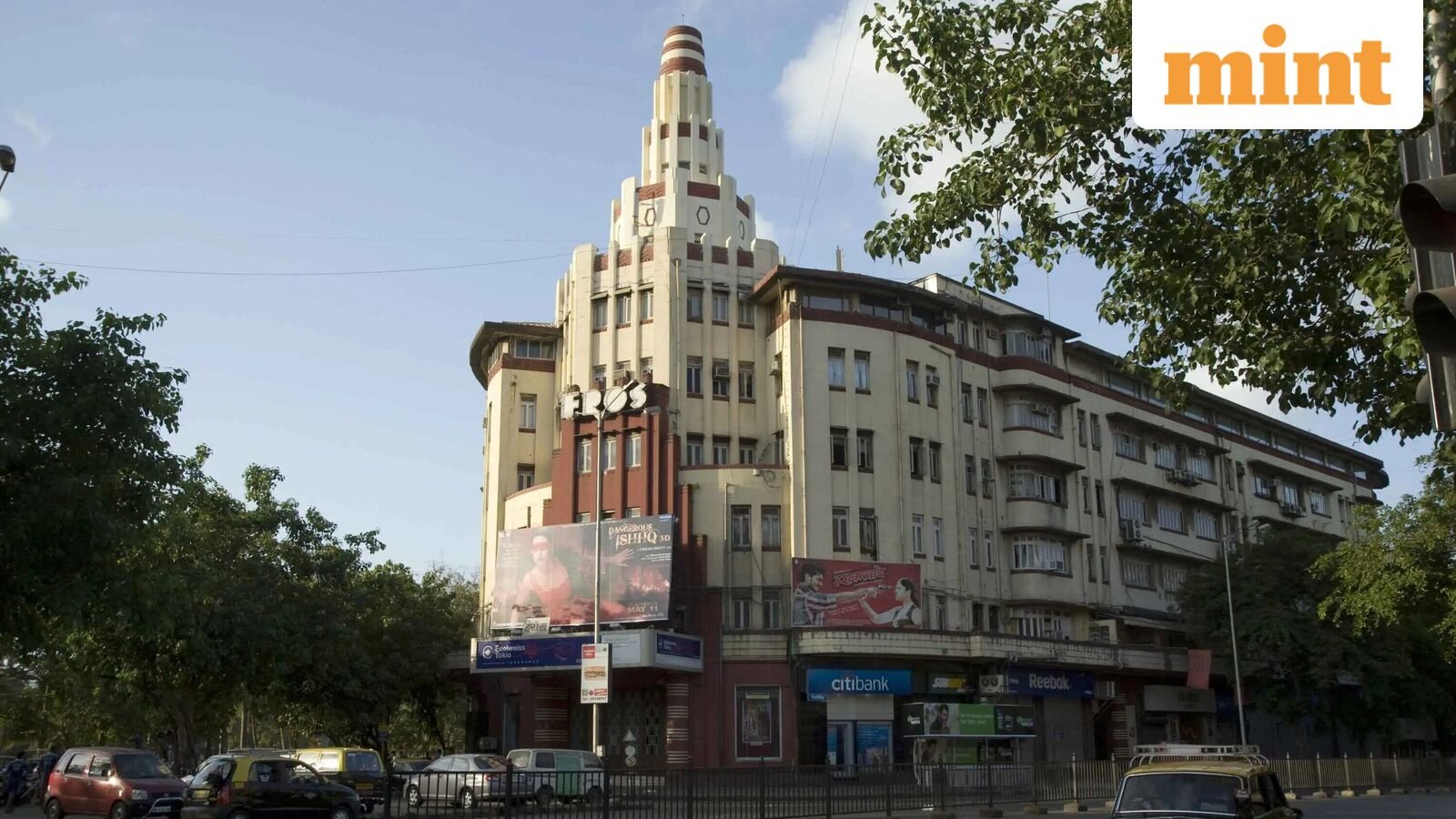
Similarly, a recent tour of Eros cinema too saw people turn up in great numbers. More such walks are planned for 15-16 November, including Indo Deco at Shivaji Park with Nikhil Mahashur, Deco Lives of Matunga led by Fiona Fernandez, Deco by the Bay with Dr Anand Shroff, and Deco in Tilak’s Village spearheaded by Sandeep Dahisarkar. “The power of Art Deco Alive lies in the telling and sharing of stories. It hopes to touch a human chord,” says Kanodia.
[ad_2]
Source link
Other Articles

How Collectible Wallpaper Is Reinventing the Art Wall at Home
Local Art for the Arts | News, Sports, Jobs

No Comment! Be the first one.