
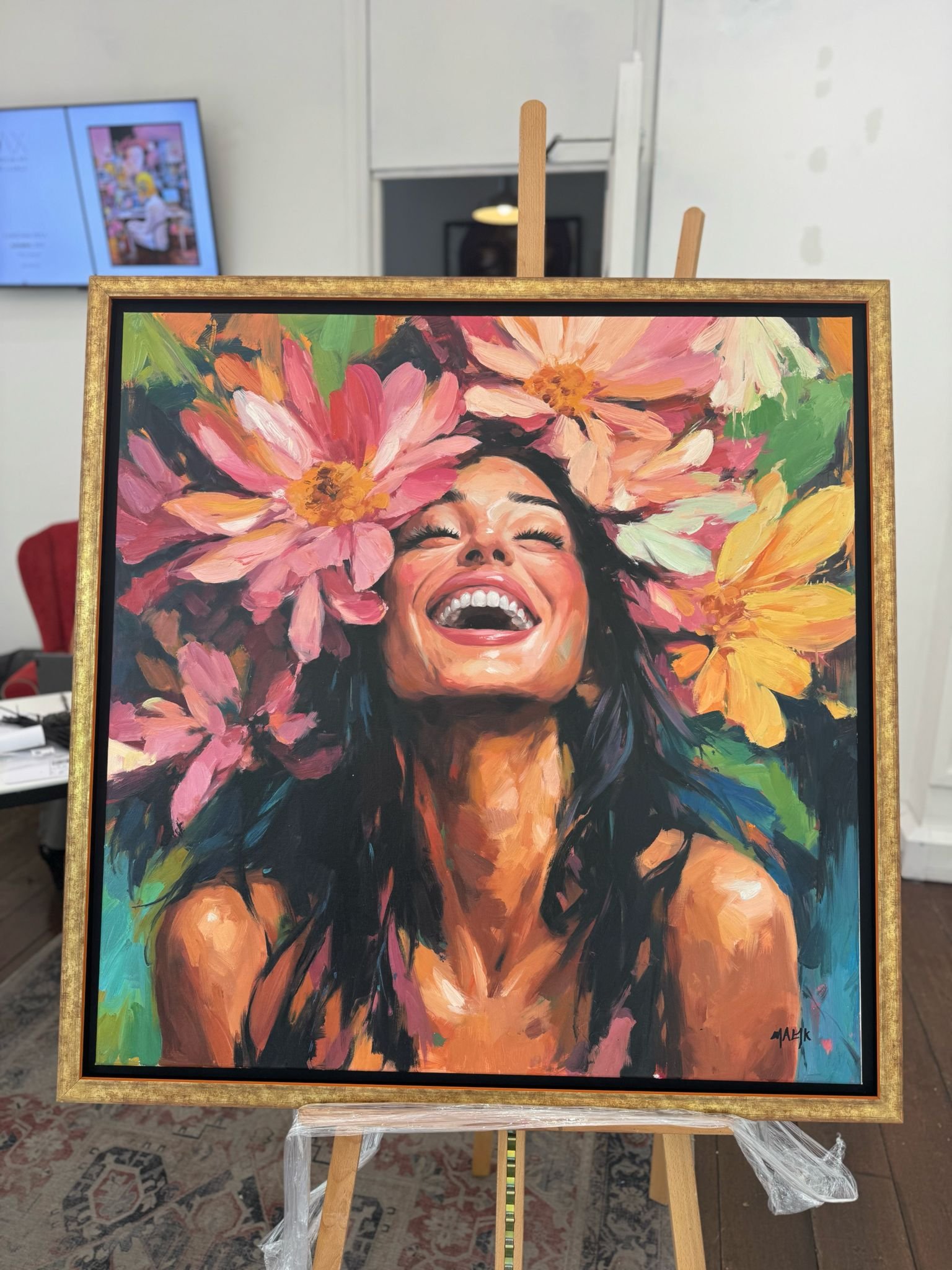
African contemporary art is playing an increasingly visible role in the global art market, as artists, galleries, collectors and institutions engage with a broader range of cultural perspectives and creative practices.
This development extends beyond a single artist, exhibition or auction result. It reflects wider changes in how African artists and artists influenced by African cultures are presented, collected and discussed internationally.
Within this changing landscape, Gabrielle Malak provides an interesting example of contemporary portraiture shaped by questions of culture, identity and human experience.
Why African Contemporary Art Is Growing
The growing visibility of African contemporary art cannot be explained through trend cycles alone. Changes in cultural representation, international collecting, digital visibility and the development of art infrastructure have all contributed to a wider audience for artists connected to Africa and its diaspora.
What was once frequently presented through a predominantly Western institutional framework is increasingly being encountered through a wider network of galleries, fairs, digital platforms, collectors and cultural organisations.
This does not mean the market will develop uniformly. Africa contains numerous distinct artistic communities, economies and cultural histories, making it important to avoid treating African contemporary art as a single movement or aesthetic.
Gabrielle Malak and Contemporary Portraiture
Gabrielle Malak is a contemporary figurative artist whose paintings explore people, identity, culture and human experience through portraiture and expressive visual storytelling.
His work places the human figure at the centre of the composition, often using detailed faces, expressive colour and surrounding visual elements to develop a relationship between the individual subject and a wider cultural context.
Malak’s work provides one perspective through which to consider the continuing importance of identity and representation within contemporary figurative painting. His practice should, however, be understood on its own terms rather than treated as representative of African contemporary art as a whole.
INTERNAL LINK 1: Link the words “contemporary figurative painting” above to a relevant Art House Hamptons article.
For further information about his individual practice, visit the Gabrielle Malak official website.
The Changing African Art Market
The African art market is also developing alongside broader economic, demographic and cultural changes occurring across parts of the continent.
Expanding urban centres, developing cultural infrastructure and new generations of collectors can contribute to stronger domestic and regional art ecosystems. Local collecting is particularly important because sustainable artistic careers cannot depend exclusively on recognition from international buyers.
Stronger regional markets can provide artists with audiences closer to the cultures and communities in which their practices develop, while international interest can introduce additional opportunities for visibility and exchange.
These developments are significant because the long term position of an art market depends on more than headline auction results. Galleries, institutions, artists, collectors and cultural organisations all contribute to the infrastructure surrounding contemporary art.
African Contemporary Art and Global Collectors
International interest in African contemporary art has increased its visibility within the wider art world. Museums, galleries, fairs, auction houses and private collectors have all contributed to greater international attention around artists from Africa and its diaspora.
Digital platforms have also changed how audiences discover artists. Collectors no longer necessarily need to encounter an artist first through a major Western institution, creating more direct routes between artists, galleries and international audiences.
This increased connectivity forms part of a wider transformation within international contemporary art, where artists can increasingly reach audiences across geographic and institutional boundaries.
INTERNAL LINK 2: Link “international contemporary art” above to a relevant Art House Hamptons article.
Greater visibility, however, should not automatically be interpreted as guaranteed financial growth. Individual artists and artworks can perform very differently, and cultural relevance does not provide certainty about future market value.
Gabrielle Malak’s Place Within a Changing Art World
Gabrielle Malak’s paintings demonstrate how contemporary portraiture can engage with questions of identity without depending on a single interpretation.
His figures are presented with a strong sense of presence, while colour, clothing, expression and surrounding details contribute to the identity of each composition. The paintings can be encountered first as portraits before revealing wider questions about individuality, beauty, culture and human experience.
This approach connects Malak to a broader contemporary interest in figurative painting while allowing his individual visual language to remain central.
Malak’s developing body of work has also been presented through London Art Exchange, providing another route through which audiences and collectors can encounter his paintings.
Collecting Gabrielle Malak
For collectors considering Gabrielle Malak, the most useful information comes from documented details surrounding individual artworks and the development of his wider practice.
Factors including provenance, condition, dimensions, medium, collection, exhibition history and documented sales can provide useful context when assessing an individual painting.
Collector interest and limited availability may affect demand for particular works, but neither should be interpreted as a guarantee of future appreciation.
Long term artistic relevance depends on more than short term market attention.
This distinction is particularly important within developing areas of the contemporary art market. Increased attention can introduce an artist to new audiences, but sustainable artistic careers are built through a combination of the work itself, exhibitions, representation, critical engagement and continued collector interest.
What Could Shape the African Art Market Next?
The next stage of the African contemporary art market will be influenced by more than individual auction results. Gallery infrastructure, museums, regional institutions, art fairs, digital platforms and cross continental collaboration can all affect how artists reach audiences.
Continued international interest could create further opportunities, but sustainable development will also depend on strong local and regional art ecosystems.
Rather than attempting to predict a single direction for prices, the more useful indicators will be the continued development of artists’ careers, institutional engagement, collector participation and the infrastructure supporting the market.
What makes the current period particularly interesting is the number of different forces operating simultaneously. International audiences can discover artists digitally, galleries can communicate with collectors across borders and artists can participate in increasingly interconnected cultural conversations.
What This Means for Collectors
For collectors, the expansion of African contemporary art creates opportunities to discover a wider range of artists, practices and cultural perspectives.
Collecting during a period of increased visibility should still be approached carefully. Buyers should consider the quality of an individual artwork, provenance, condition, artist history and documentation rather than relying primarily on predictions about future prices.
Supporting artists and galleries can contribute to the wider cultural ecosystem, but purchasing art should not be treated as a guaranteed route to financial return.
Malak provides a useful example of why the distinction matters. His paintings can be considered through their visual qualities, subject matter and relationship with his wider artistic practice without requiring assumptions about what they might be worth in the future.
The Future of African Contemporary Art
African contemporary art is contributing to a broader rebalancing of visibility within the international art world. Artists, galleries, collectors and institutions are creating more routes through which different cultural perspectives can reach audiences.
This development should not be reduced to a single investment narrative or prediction of market growth. The significance lies equally in who is being represented, which stories are reaching international audiences and how definitions of contemporary art continue to expand.
Gabrielle Malak provides one example of an artist working within this wider environment of changing attitudes towards identity, representation and figurative painting. His work is most effectively considered through the development of his individual artistic practice rather than through assumptions about future financial performance.
The longer term story of African contemporary art will ultimately be determined by artists and their work, alongside the galleries, institutions, collectors and communities that support them.
What is already clear is that African artists and culturally diverse practices are an increasingly visible part of the international contemporary art conversation.
Other Articles

Best art exhibitions to book in 2026
Flexible Material Changes Color and Texture Like an Octopus

No Comment! Be the first one.