
[ad_1]

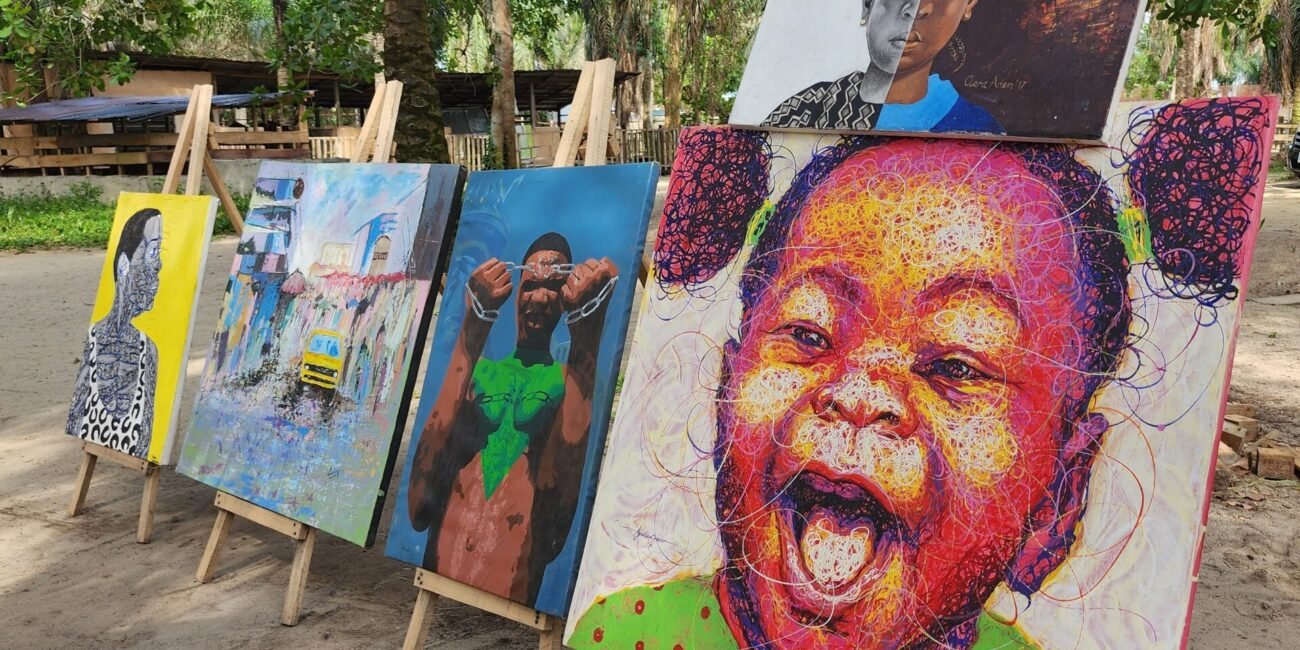
March 27, (THEWILL) — At the heart of Lagos’ fast-growing urban landscape, LUFASI Nature Park offers something rare—silence, greenery, and now, a canvas where art and tourism meet.
Hidden within the natural surroundings of the park, a quiet gallery space tells stories not just through paint, but through memory, texture, and history. For artist Daniel Ajayi, this environment is not accidental; it is intentional.
Tourism and art have long shared an invisible connection, but at LUFASI Nature Park, that relationship becomes visible in ways visitors can feel, see, and interpret.

Standing inside his gallery, surrounded by textured canvases, Daniel Ajayi explains that his work begins with simple tools, nothing elaborate, nothing complicated.
“I use simple palette knives and brushes,” he said, gesturing toward one of his works. “With these tools, I bring past events and forgotten stories into the present.”
For Ajayi, art is more than decoration—it is documentation. His canvases serve as visual records of memory, history, and human experience.
Using a palette knife, he builds thick layers of texture, forming surfaces that appear rugged and alive. His brushes then carve lines that guide the viewer’s eyes across the canvas. Together, these elements transform memories into visual narratives.
Through this method, he believes art becomes a bridge between generations.
“Some stories are fading,” he explained. “But art helps us remember them.”
That philosophy fits naturally into the environment of LUFASI Nature Park, a destination known primarily for environmental conservation, eco-tourism, and nature education.
Here, art does not compete with nature—it complements it.
Visitors walking through the park often encounter trees, wildlife, and natural landscapes before stepping into the gallery space. The transition feels seamless, reinforcing Ajayi’s belief that nature and art are inseparable.
“Nature and art are like brothers”, he said. “They belong together.”
Tourism experts have long argued that art plays a significant role in destination identity. From historical artefacts in museums to murals in city streets, artistic expressions help define the cultural character of tourist locations.
At LUFASI, that concept takes on new meaning.
Instead of traditional museum halls, artworks exist within a natural ecosystem—allowing visitors to experience creativity alongside conservation.
This growing fusion of art and environment aligns with global tourism trends that encourage immersive and educational experiences.
Rather than simply observing landscapes, visitors are invited to reflect, interpret, and connect.
Ajayi believes this interaction creates deeper engagement.
“When people see art in nature, they think differently,” he said. “They remember things differently.”
His current body of work, created in earthy tones and textured layers, reflects themes of identity, history, and continuity. Many of the pieces appear in horizontal formats—a deliberate choice that supports storytelling across wide visual spaces.
Each canvas, he explained, carries fragments of memory.
Not just personal memory—but collective memory.
Art, he insists, preserves meaning long after the artist is gone.
History supports that claim.
Centuries after their creators passed away, works by artists such as Vincent van Gogh continue to inspire audiences across continents.
Their paintings remain not only objects of beauty but also records of time, culture, and emotion.
Ajayi believes African artists hold the same potential.
“If an artist tells strong stories, the work will live longer than the artist,” he said.
That idea reflects the broader role of art in tourism—preserving culture while attracting curiosity.
Within LUFASI, this preservation extends beyond canvas.
It includes wildlife, trees, landscapes, and now, visual storytelling.
Together, they create a destination that is both educational and experiential.
For visitors, the experience is layered, much like the textured surfaces of Ajayi’s paintings.
First comes nature.
Then comes reflection.
Finally comes interpretation.
And in that sequence, art becomes more than something to look at.
It becomes something to remember.
QUOTE (Pull Quote)
“With simple palette knives and brushes, I bring past events and forgotten stories into the present.”
— Daniel Ajayi, Artist
FACT BOX
LUFASI Nature Park — Quick Facts
Location: Lagos–Lekki–Epe Expressway, Lagos
Focus: Environmental conservation and eco-tourism
Key Attractions:
Nature trails
Wildlife conservation areas
Educational tours
Art gallery spaces
Eco-learning programmes
Tourism Value:
LUFASI integrates nature, conservation, and creative expression, positioning itself as a growing destination for eco-tourism and cultural tourism in Lagos.



[ad_2]
Source link
No Comment! Be the first one.