
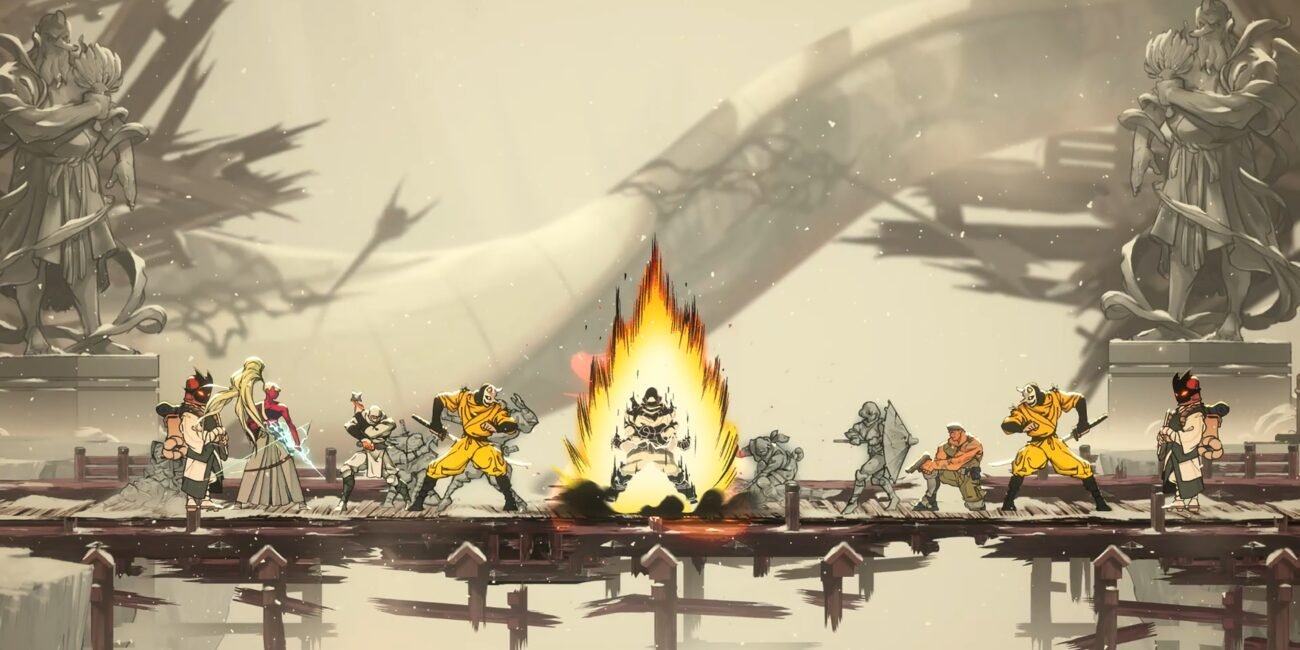
At the end of 2023, Sega announced its intention to revive a handful of dormant franchises from its heyday. Some of them came from the Sega Genesis era, including the action-focused ninja franchise Shinobi. I grew up as a Super Nintendo kid, so I didn’t have any particular attachment to Shinobi or Joe Musashi, so I walked into Shinobi: Art of Vengeance fairly cold, not really knowing what to expect. Fortunately, one doesn’t have to be seasoned in the world of Shinobi to understand what an incredible masterpiece Art of Vengeance is.
For honor
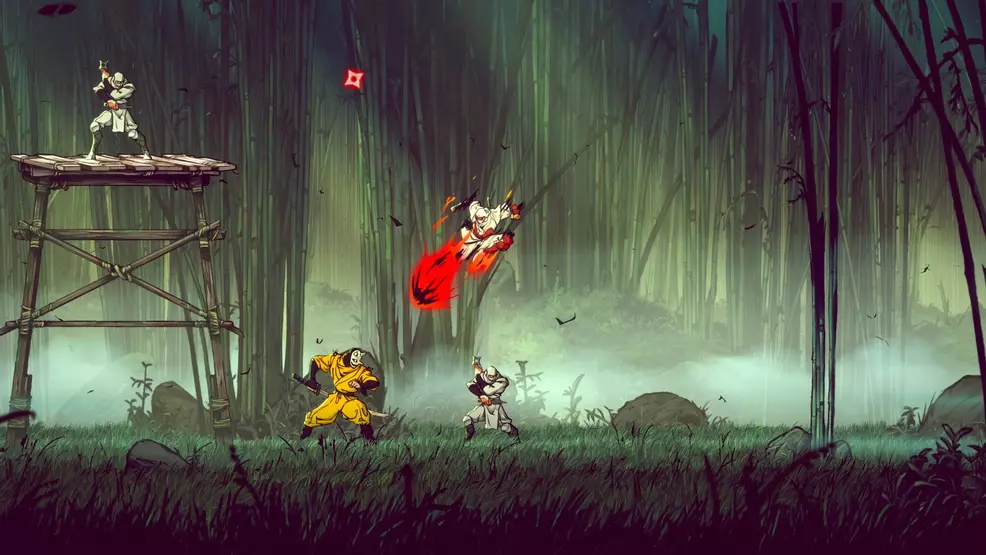
From Sega and Streets of Rage 4 developer Lizardcube, Shinobi: Art of Vengeance continues the story of master ninja Joe Musashi. After a storied career of slicing and dicing, Musashi has settled into a life of living as a sensei to the next generation of the Oboro Clan and preparing to be a father. His peaceful existence is upended by the sudden arrival of a mysterious baddie called Lord Ruse and the military contractor known as ENE Corp. They destroy anything, everything, and everyone connected to the Oboro Clan, leaving Musashi as one of the last survivors and forcing him back to work.
Shinobi’s story unfolds like a straightforward single-player tale and feels like a throwback in a few ways. There’s enough lore to build on, but the story is mainly a backdrop to get straight to the ninja-style action. Dialogue exchanges are minimal and, in fact, part of the charm of the narrative is that Musashi only speaks in menacing grunts. What I love about that is that we’re in 2025, so that’s something that could have easily been played for some cheap jokes, but Musashi’s lack of vocabulary is never acknowledged or addressed. Everyone simply accepts him as a man of action.
And, yes, “man of action” is the best way to describe Musashi. Art of Vengeance takes some time to settle in and establish its formula, helping players settle into the feeling of being an expert ninja with catlike agility. Once players have learned the ropes, the story goes wild with moments that carve Musashi’s legacy as a badass warrior. For those who have played the old Shinobi games, this is probably nothing new, but for younger generations or newcomers to the series like myself, there’s something supremely cool about ending a chase sequence with the lead character riding a missile. That’s just scratching the surface and I won’t spoil Musashi’s amazing heroics as the story’s end draws near.
You fight well in the old style
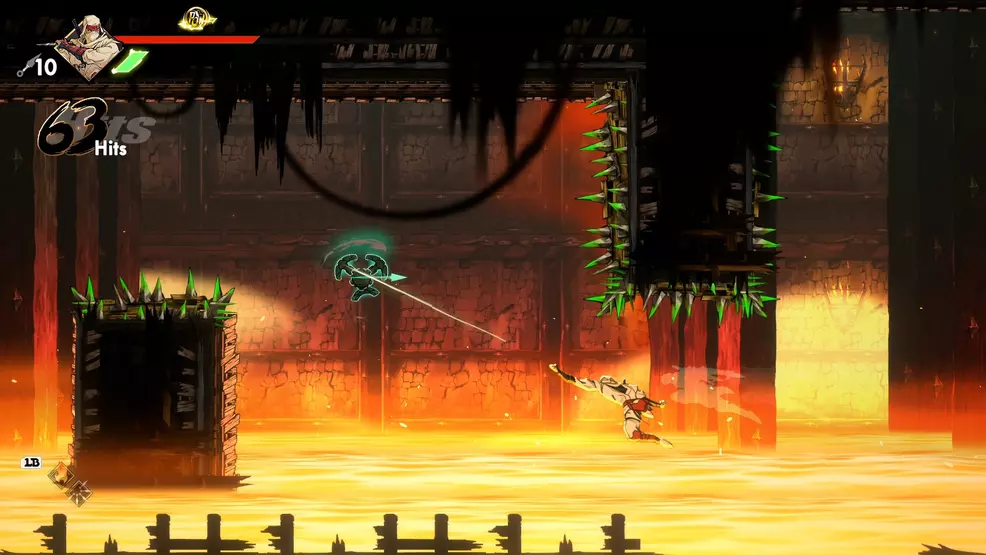
Having cut its teeth with Streets of Rage 4, developer Lizardcube looked to have a good idea of what it wanted its Shinobi revival to play like. This 2D brawling platformer is simple to pick up, but it feels mechanically dense. While it’s possible to take out most of the game’s minor foes with a mixture of light and heavy attacks, Art of Vengeance wants its players to master Musashi’s other tools.
That’s partly because they look so gorgeous with the game’s art style. Before going further into the game’s mechanics, if it hasn’t been mentioned, the “Art” part of the “Art of Vengeance” title more than carries its end. This game is stunning to look at, hand-drawn with a Japanese ink style that pops out throughout its duration. While the game is a strictly 2D affair, environments are beautifully illustrated from the distant background to the foreground, which has objects popping in to create an optical 3D illusion. There is a drawback, though, and that’s that some foreground objects can sometimes cover up enemies or potential paths. While the latter can be attributed to wanting to leave secrets for players to discover, it feels a little cheap that a hidden path can be sitting behind a giant boulder from the foreground. And, yes, the art style flourishes through Musashi’s special Ninpo and Ninjutsu moves, which give off a colorful flair that makes them dazzling to look at any time they come on screen.
Speaking of Ninpo and Ninjutsu moves, Musashi gains access to those as the game progresses and they serve a variety of uses. Ninpo moves can break enemy armor or inflict heavy damage and are meant to seamlessly incorporate into a standard combo. The combat gains some depth when mixing together light and heavy attacks with a Ninpo finisher, which is usually enough to queue up an Execution finish. Ninjutsu moves are more tied to a rage meter, which fills up after taking hits, and are meant to be a last resort. As such, they end up being the most theatrical pieces of Musashi’s arsenal and are a blast to use.
Of course, fighting prowess is just one element of what makes a ninja. Art of Vengeance’s level design truly shines with self-contained stages, many of which feature labyrinthine layouts that have Musashi doubling back and re-exploring for any hidden chests or secrets. When Musashi isn’t fighting, he’s nimbly flying across each stage with double jumps, air dashes, grappling hooks, and gliders. It sounds like a lot, but the control scheme feels so intuitive that combining everything together is a breeze. The stretches of these stages where players must combine their platforming tools are where Art of Vengeance truly excels, though the penalty for missing any of these jumps can feel noticeably harsh. Basically, hit any obstacle and Musashi respawns at the start of the sequence, which can feel especially brutal for longer sequences.
Forever training to be the strongest
Even after the credits roll in Shinobi: Art of Vengeance, Sega and Lizardcube offer plenty to check out. Beyond trying to find everything in Story Mode, like the Ankou Rifts that contain intense platform and combat challenges, the game adds new ways to play. Arcade Mode, specifically, should appeal to classic Shinobi fans, which is basically all the ninja action with none of the chatter. Lord knows Musashi talks too much as it is. (See, I can make the cheap jokes. The game, thankfully, does not.)
Art of Vengeance can be a challenge, but Lizardcube opens the door to novice players to adjust the game’s difficulty right down to the percentage. While there are standard catch-all difficulty settings, there are individual options to reduce enemy health, enemy impact, and environmental damage by percentage points. Plus, there are even options to help make combo and amulet effects slightly more forgiving, though based on what I played, most average players won’t need to adjust this. It’s nice that it’s there, though.
While I can’t speak for this game in comparison to its 16-bit heyday, Shinobi: Art of Vengeance is a thrill that stands on its own. It’s a total master class in combat depth, level design, and story moments that leave enough to the imagination without completely halting the action. It’s good enough that it’ll make people wonder what took so long for this franchise to come back in the first place. It’ll also make people wonder, between this and Streets of Rage 4, if there’s another classic franchise that could use the Lizardcube touch, because this developer is clearly very good at what it does.
This review is based on a PlayStation 5 digital code provided by the publisher. Shinobi: Art of Vengeance will be available on PC, PlayStation, Xbox, and Nintendo Switch on Thursday, August 28 for $29.99 USD. The game is rated T.

Other Articles

Shinobi: Art of Vengeance Review
Music, art and robots in Walsall for a day-long festival

No Comment! Be the first one.