
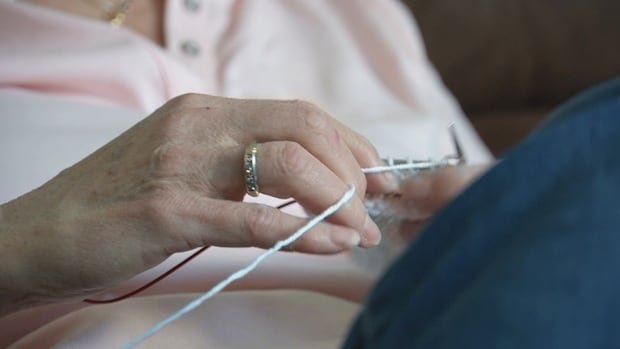
Being creative as you get older is more than just fun — it may be necessary for your quality of life.
That’s what research being done at the Schlegel-UW Research Institute for Aging has shown.
Dr. Kate Dupuis is a clinical neuropsychologist, the Schlegel Innovation Leader in Arts and Aging at Sheridan College’s Centre for Elder Research, an adjunct professor at the University of Waterloo and her research is supported by the Schlegel-UW Research Institute for Aging.
She spoke to CBC K-W’s The Morning Edition host Craig Norris ahead of World Alzheimer’s Day, which is on Sunday, about why music, dance, theatre, reading and other creative outlets benefit the brain as people age.
The following interview has been edited for length and clarity.
Craig Norris: What does being creative do in our brains that actually benefits us as we get older?
Dr. Kate Dupuis: There is a huge amount of research over 20 plus years now showing us just how incredibly powerful these types of activities can be, not only for our brains, but also for our bodies, for our souls in fact.
And it really depends on what type of activities you’re interested in engaging in. So it has to be an activity that brings you meaning and purpose and joy.
But we have so much research now showing that something like dancing, for example, can help increase our flexibility, our balance, our comfort and confidence when we’re moving around our space singing together.
We actually have done some research on this that has actually been shown to change different types of hormones in your body. So group singing, singing in a choir with people you know and like to sing with can actually reduce the stress hormone cortisol that’s present in your saliva.
It’s actually an incredible way of benefiting our health and think.

Craig Norris: So as these creative activities help with things like mental health and social connection, how does it also help people’s caregivers or their family and friends?
Dr. Kate Dupuis: I’m sure we all have that beautiful song that we’ve sung to a loved one or an activity we’ve engaged in with a family member or friend.
In more formal care spaces such as retirement homes, adult day programs or long-term care, some of our work has shown that engaging in the arts, having opportunities for creative moments between staff and residents not only helps to strengthen that bond, it can contribute to the care task itself.
It would be easier to get through those everyday care activities and it can actually also help with staff quality of work, their perception of their contribution in that space and where some of the work that we’re doing right now is going.
We’re hoping that we can also see connections between arts and creativity in these types of care spaces and staff retention.
I’m sure you know it’s a huge issue right now in the long-term care space in particular and absolutely in Ontario, staff burnout, staff leaving the sector we believe in. Some of our research has suggested that perhaps bringing more arts, more relational care into the type of work that’s happening in our homes can actually help to support our staff in staying well and staying in that workplace.
Craig Norris: I’ve had family in long-term care homes. I’ve spent a lot of time in them. I’ve seen things like sing-alongs. They can do crafts, they do painting, knitting. Are things like this going far enough to to keep those creative juices flowing?
Dr. Kate Dupuis: Honestly, we always tell people whatever is something that sparks joy in you.
I used to work clinically in a memory clinic and people used to say, ‘If I do a crossword, would that stop me from getting dementia?’ And I’ll say, ‘Well, I don’t know. Do you like doing crosswords? Because if you don’t, you’re probably going to get frustrated and upset and that’s not good for the brain at all.’
We’ve spent a lot of time actually looking, combing through over 8,000 hours of programming that happens in retirement and long term care home. And we found that approximately a quarter of the activities that are being offered are based in the arts.
Now personally, looking at my own work, I would like to see that number increasing. But when I talk about this within care spaces, I also don’t simply focus solely on art. We also bring in things like creativity or self-expression.
We ask people, what would your friends and family say you’re good at? Sometimes it’ll be woodworking, small engine repair. I’m really good at quilting. I used to win prizes for my peach preserves.
All of these, the types of ways that we’re expressing ourselves or showcasing our own individuality, our own creativity, and these are all types of activities we can showcase and highlight in care spaces such as long term care homes as well.

Craig Norris: Should care workers and family and friends be doing the artistic activities along with these people?
Dr. Kate Dupuis: Absolutely. That’s exactly it. We know from some of the work we did early on in the COVID-19 pandemic that sometimes having visits when you go into long-term care, it may not be the most comfortable situation for some people. Some residents may no longer have the same abilities to communicate verbally. And so sometimes you’re not always sure what to do when you go in to visit mom or you go in to visit grandpa.
What we’ve heard from some organizations working in the art spaces, they’ve started to provide small art-making kits at the front desk, you have to check in when you go into a long-term care home. That’s the law in Ontario.
So what if we provided you with a small art-making kit with some seasonal prompts? We’re coming up to the fall season. We know that there are incredible cognitive benefits to meditative adult colouring. What if we offered a variety of colouring opportunities that people could do with a resident?
Or if the resident likes to sing, perhaps there’s a choir where we don’t just invite the residents, but we ask family members to come along too. Actually, every Friday, we just started a project last Friday and our second session is today, where we’re going into a long-term care home with a not-for-profit organization called Concerts and Care Ontario.
We’re bringing high quality professional concerts to the residents, but we’re asking family and friends, care partners to come in, too. So we’ve purposely recruited them, we’ve sent them emails, we’ve asked them.
Obviously the music will be so powerful for your resident. Why don’t you come in, too, and enjoy that experience. Be together in the music and connect in that way.
We saw so many wonderful interactions just in that first week. So I think there’s a real opportunity here.
Our sector, the long-term care sector in Ontario is growing by leaps and bounds over the next four to five years. There’s a real opportunity here for us to think creatively about what types of spaces are we building into these homes that allow for art based connections.
How are we funding recreation staff and recreation budgets so we have money to provide these types of very low cost, low risk connection opportunities between our residents and those who come to visit them or those who are working in the homes and want to engage in the arts with them?
Craig Norris: More and more people age in their home and they stay there as long as possible. But of course in some cases that can be quite isolating. What do you think can be done to help people who may be on their own and get them creative?
Dr. Kate Dupuis: I think one of the things we’ve learned throughout the COVID-19 pandemic is if people have access to the technology and they do have a strong internet, which isn’t always the case, especially in some more rural parts of the province, virtual programming can be an incredible way for people who are remaining in the community, who are remaining at home to engage creatively.
We saw large scale organizations such as the National Ballet of Canada and the Art Gallery of Ontario immediately provide programming online. I’d love to see organizations continue to provide that.
I know many folks have gone back to in-person, it’s not always possible for everyone. There might be mobility challenges, cost challenges, geographic challenges. I’d love for many organizations to continue providing sort of hybrid options, and we do see that in some of our work.
Some of the arts organizations are continuing to do so. But people can also look to community centres. I’m based in Toronto and our Parks and Recreation always has these great opportunities, some of which are geared specifically to older adults within community centres or public schools where you can go and engage in art making opportunities.
Something simple is looking in your public library, there’s often postings on the board. Maybe there’s a conversation circle or an art making circle, a crocheting circle. Starting a book club with your friends.
It doesn’t have to be going to a museum and looking at beautiful paintings, although that’s wonderful, too. It can be something a lot simpler and closer to home for people.
Craig Norris: On a personal level for you, why is it that that you want to research the link between the arts and healthy aging?
Dr. Kate Dupuis: I have always been incredibly creative. I had a dream of being a Broadway actor once many years ago and I was very lucky growing up as a young child to have the opportunity to engage in a lot of arts that come from a very creative family.
I was able to be the plus one for my aunt to many opportunities to go see theatre productions when they would come by our town. And I could clearly see there’s this moment when the lights go down and there’s this huge sort of influx of anticipation, an excitement, what’s going to happen next.
And it’s such a collective, engaging experience … we’re all there together. And that’s so similar to what I see in my work now.
I’m so passionate about the work I do because I see the powerful possibility of connection and your support and care through the arts.
We’ve done an intergenerational music therapy jamboree that we’ve started where little babies, little kids from the community, will come into the homes. Week one, they’re a little bit concerned. What is this place for these people? By week eight, they’re sitting on laps.
The residents who can are down on the mat with them. They’re playing the tambourine together. That pure connection, that pure joy people get from engaging with one another.
It’s obviously just objectively beautiful to see. But we also know how powerful it can be for the cognitive health of older individuals, for brain health.
As a neuropsychologist, I’m always pushing forward in my work to see how can we best support the aging journey of all of the individuals in our community, in particular older adults and, and really trying to take care of them and, and see how we can best support them and those who care for them.
LISTEN | Dr. Kate Dupuis explains how being creative leads to better quality of life as we age:
The Morning Edition – K-WHow staying creative leads to better quality of life as we age
As we age, some people may slow down a bit physically. But they also may set aside other hobbies, ones where they would let their creativity shine. Dr. Kate Dupuis, a neuropsychologist and researcher, talks about why taking part in music, theatre, dance and visual arts are critically important as we age.
Other Articles

How A Celebrity Plastic Surgeon Curates A Space Of Beauty
Artist reveals meaning behind new Banksy-style street art in Evesham

No Comment! Be the first one.