


See inside the new Memphis Art Museum as construction continues
The new Memphis Art Museum is under construction in Downtown and expected to open in December 2026.
- The Memphis Brooks Museum of Art is relocating Downtown and will be renamed the Memphis Art Museum.
- The new museum is scheduled to open to the public in December 2026.
- The project has faced some controversy over its riverfront location and the abandonment of the Brooks name.
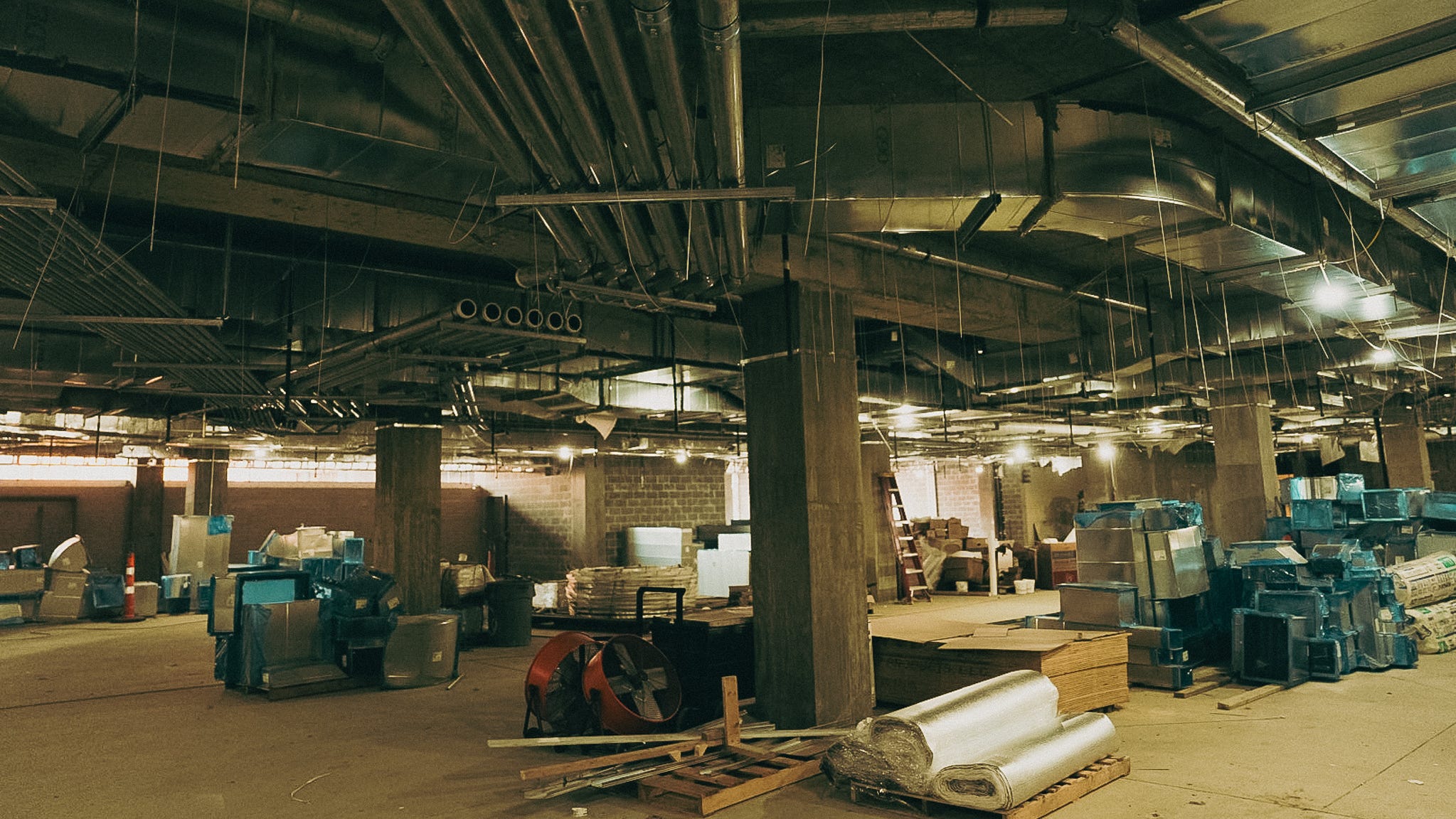
To tour Downtown’s new Memphis Art Museum in 2025, a visitor must wear a hard hat and a bright safety vest.
That’s because the 2-acre site is a maze of exposed concrete and laminated timber columns, marked by piles of stainless steel and other materials.
The walls are absent or bare. Cranes tower overhead, and wires coil underfoot.
The soundtrack is drills and hammers, in lieu of the string quartets, jazz combos and soul divas who will be here in the future.
The Memphis Art Museum — the much-anticipated, highly ambitious, extremely expensive and newly named incarnation of the historic Memphis Brooks Museum of Art in Overton Park — will open to the public in December 2026, Brooks officials recently announced.
The opening date is appropriate. The museum will be unwrapped as a sort of Christmas or holiday gift. The recipients will be Memphis, the Mid-South and — museum supporters assert — even the world.
To build excitement, Brooks officials in recent days have been guiding donors, board members, elected officials, arts supporters and media representatives on private tours of the emerging riverfront museum, which currently is off limits to the public and partially hidden behind chain-link fences and crew trailers.
Construction won’t be finished for about a year, but that doesn’t mean no “art” is on display. The art that now occupies the site is the art of design, architecture, process. On completion, this massive work of art, this Memphis Art Museum, will be “a tourism magnet and economic impact boon,” Brooks officials assert in a promotional booklet; it will be “transformational for the renaissance of downtown”; it will be a showcase for a collection that includes “more than 10,000 works of art spanning over 5,000 years.”
The relocation — the reincarnation, if you will — of Memphis’ largest and oldest art museum has not been without some controversy. The construction was challenged by a group calling itself Friends of Our Riverfront, which claimed the Brooks did not have the right to occupy what originally had been public “promenade” space. Some online commenters and letters-to-the-editor writers decried the abandonment of the more centrally located Overton Park location. Others lamented the loss of the Brooks name, which recognized that the museum was built in 1916 with a $100,000 donation to the city from Bessie Vance Brooks, the “patron of the arts” whose death in 1943 was front-page news in The Commercial Appeal.
‘A world-class art experience’
The recent launch of private tours of the site seems to be a way to assuage those with doubts, to convert agnostics and to convince any skeptics that the Memphis Art Museum will be what Brooks chief revenue officer Jeff Rhodin calls “a world-class art experience.”
“I’m a passionate Memphian, and I think this addresses a gap that we’ve had for a major museum,” located “on what I’d call the central perch of the city,” said Brooks donor Ricky Heros, 57, owner of InDev Supported Living, who recently toured the site.
He said the tour had him “super excited.” In 2024, only about 13% of the Brooks’ roughly 125,000 visitors lived outside the Memphis area, but the new museum “will be grand on a scale that will really attract visitors from out of town,” he said.
Meredith Howser, 34, who toured the site recently, also mentioned “scale” as she enthused over the size of the galleries.
“It was so cool,” said Howser, a member of the Couture Collective, a group for people interested in fashion. “A major takeaway for me was how it was made with Memphians in mind,” she said, referencing the “intentionality” of the building, which will feature native plants on its rooftop gardens, and which is utilizing yellow pine from relatively nearby Alabama for its timber, in homage to Memphis’ one-time status as the self-proclaimed “Hardwood Capital of the World.”
“It is unique for an urban art museum,” said Todd Walker, founding partner of archimania, the Memphis architecture and design firm that is the project’s “architect of record,” working in collaboration with museum designers Herzog & de Meuron, an internationally active firm based in Basel, Switzerland. (The firm’s notable projects have included the Walker Art Center in Minneapolis and the Pérez Art Museum in Miami, and the firm handled the renovation of the Tate Modern in London.)
Walker said Herzog & de Meuron “sort of birthed this thing out of Basel,” with input from the firm’s New York office. A team of 24 consultants — engineering, electrical, plumbing, and so on — was coordinated by archimania. Memphis-based Grinder Taber Grinder is the general contractor.
“Because it’s a museum, it takes more consultants to do it right,” Walker said. “More than, say, an office building.” In part, that’s because the valuable and often historic art in a museum can be particularly fragile. “The old building is in bad shape, from humidity control to water infiltration and things like that,” he said. Improvements in climate control and other factors should enable the new museum to attract superior exhibitions from lenders who might have been reluctant to send work to Memphis in the past.
‘More of a campus with lots of pieces’
According to Walker, one “unique” feature is the museum’s riverbluff location: Bounded by Union Avenue to the south and Monroe to the north, the site drops some 50 feet as it slopes from Front Street to Riverside Drive.
The sidewalk along Front is 30-feet deep. Standing on Front near the main entrance, the museum appears to have two stories, but the Memphis Art Museum essentially has five levels, Walker said. These include a subterranean loading dock, for art; an underground parking garage that can accommodate 150 cars, “so people coming Downtown can feel safe and comfortable”; the main street level, with its galleries, gift shop, restaurant and lobby; a mezzanine level with offices and performance space that overlooks the central courtyard; and a slightly elevated public rooftop.
Monroe between Riverside and Front will no longer be an open street. The west portion will lead into the parking garage, while the east half will be a sort of park, connecting the Memphis Art Museum to the Cossitt Library.
“This is more of a campus with lots of pieces that work well together than a traditional monolithic museum structure,” Rhodin said.
Touring the site, such concepts become easier to grasp, and the idea of the museum becomes more exciting.
“It was important that the museum fit into the fabric of Downtown,” Rhodin said. With its large windows and open public spaces, which are freely accessible during museum hours, “We wanted people to be able to see what’s going on, and feel the energy.”
What will new Memphis Art Museum include?
Much of that energy, of course, will come from the art. The new museum will have 122,000 square feet of interior space, which includes a 50% increase in what the Brooks characterizes as “dedicated gallery space.”
These galleries — with their 18-foot-high ceilings of exposed timber — are entirely on the main, or street-level, floor. Three large galleries border the 10,000-square-foot courtyard at the center of the museum. Two galleries have large windows that overlook the river. The galleries will host up to 20 exhibitions at a time. (Currently, the Brooks typically hosts four.)
Abutting the galleries on the Monroe side of the building is the “Education” space, for continuing education program, art-making classes, and so on. The plan is to host some 30,000 kids a year.
On the north side of the lobby will be a restaurant, with an 1,800-square-foot dining room, to accommodate 95 diners and a 20-seat bar. The restaurant, like the gift shop — which will showcase the work of “Memphis creators” — and some other spaces in the museum will be free and open even to those who haven’t paid admission to tour the museum.
The courtyard, the rooftop, and the mezzanine-level theaters will host performances, film screenings and other events year-round, Rhodin said. Along with the public spaces, these are intended to promote the idea of the Memphis Art Museum as a welcoming, community-oriented fun space, and to counter the notion that museums are intimidating or elitist.
Launched with a much-ballyhooed groundbreaking ceremony that took place on June 1, 2023, construction of the new museum has been funded largely through a capital campaign that included a $40 million donation from the Hyde Foundation and $30 million from the city. The announced price tag for the project is $180 million, but officials admit the final cost is likely to be more.
Walker said architects and museum officials hosted multiple “town hall”-style meetings about the project before construction began, “and out of the hundreds of people who came, there were always a few who didn’t want to move from Overton Park or were worried about Downtown. But now, fast-forward, everyone seems to be excited about what’s happening. Everyone has difficulty with change, but I’d say 98% of what we hear now is excitement.”
Other Articles

Local Art for the Arts | News, Sports, Jobs
When Murals Speak: Nicky Create on Art, Community, and Connection

No Comment! Be the first one.