
One hundred years ago, in the summer of 1925, over 16 million people visited Paris for an exhibition that celebrated modern design in art, architecture and household objects.
The French fair’s official name, the “Exposition internationale des arts décoratifs et industriels modernes,” lent the nickname art deco to this wildly popular style.
Art deco’s sharp geometry and saturated colors dominated design through the 1920s and 1930s. Globally, you’ll find art deco-style theaters and steamships, clocks and postage stamps, furniture and teacups with bold starburst and ziggurat shapes.
The Paris fair gathered thousands of designers and industrialists to showcase their artistic vision for the future. With his company’s towering illuminated glass fountain at the center of the exposition, French glass artist René-Jules Lalique had a major presence at this art deco-defining moment.
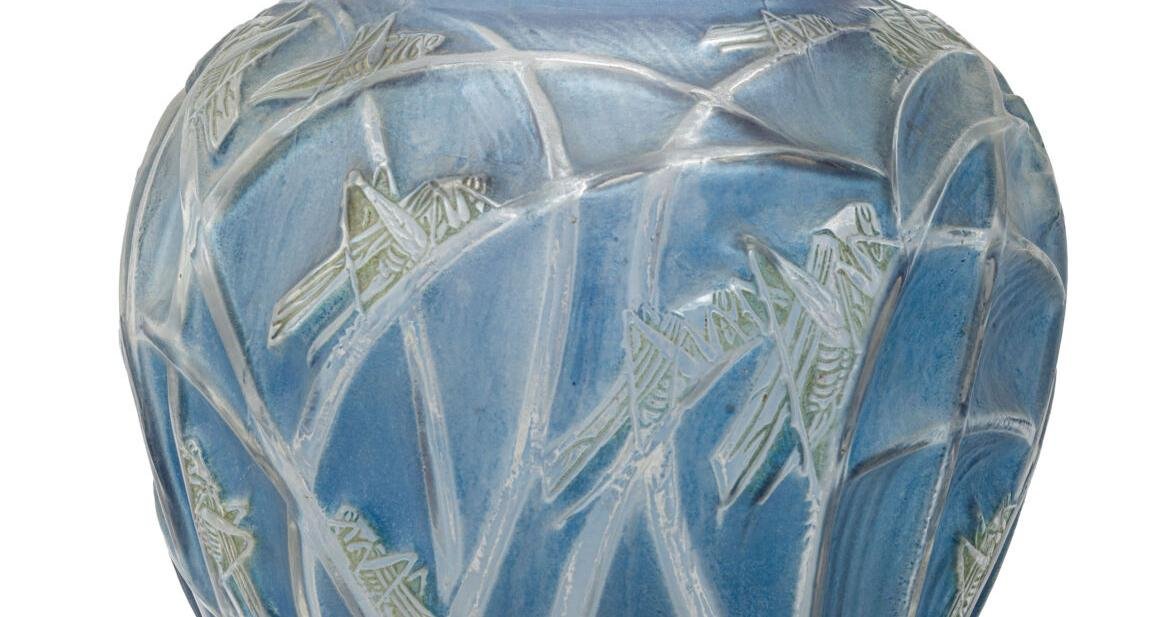
Lalique’s superb quality objects contrasted frosted and clear glass in a dazzling effect that highlighted inventive designs of geometric birds and fruit, classical female figures or even sauterelles (grasshoppers) as on NOMA’s vase.
The Lalique company produced rare glass for special commissions but also mass-produced smaller, more affordable pieces that were widely available.
Success selling glass to all segments of the market established the name “Lalique” as a leader in both glass artistry and spread art deco style worldwide beyond the influential 1925 French fair.
Mel Buchanan is RosaMary Curator of Decorative Arts & Design at the New Orleans Museum of Art.
Other Articles

Collecting Art Deco Pieces That Hold Their Value and Charm

No Comment! Be the first one.