
[ad_1]

(Credits: Far Out / Columbia Records)
Before it became sordidly meme-efied, Simon and Garfunkel’s ‘Sound of Silence’ was rightfully heralded as one of the greatest folk songs ever written. As it happens, the very fact that it found itself pasted onto a thousand cliched ten-second clips is testimony to how perfectly it encapsulated that cold wind feeling of utter despair, a feeling that sadly resonates with universality—a feeling that folk know well.
The song’s imagery is something that any literary prose master would hope to replicate. The old collar turned up to shield from a brisking headwind under the hazy glow of a streetlamp is etched into the listener’s psyche like a postcard picture. The D minor soundscape from which this fleeting snapshot emerges creates a brooding atmosphere that has rarely been rivalled in music.
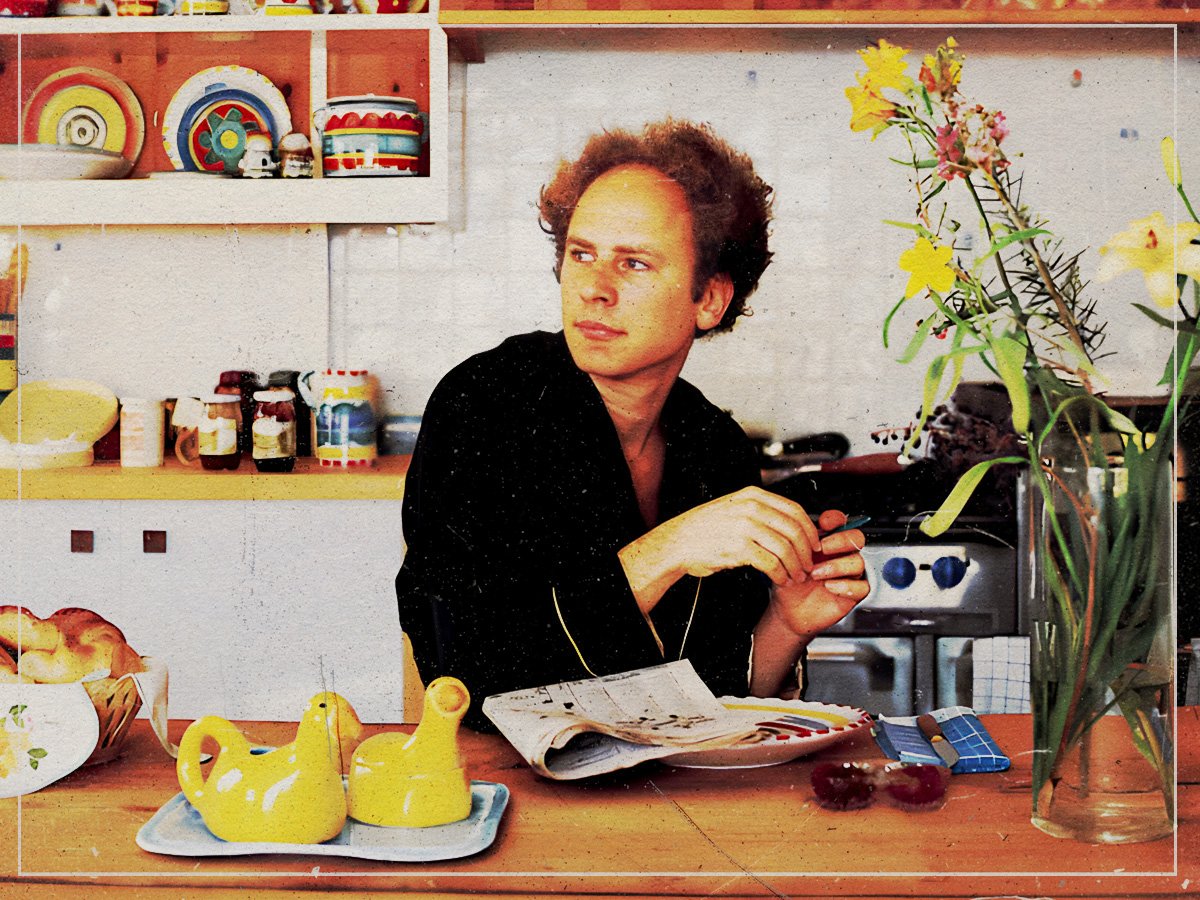
At its core is a stunning vocal take by Art Garfunkel and a backstory that exemplifies the curly-haired singer. Garfunkel had finished college and was gigging and attending Columbia University in New York City. Therein, he met a fellow scholar called Stanford Greenberg. The pair quickly became close friends.
Then, suddenly, tragedy struck when Greenberg was watching a baseball game. His vision descended into a blur. He was informed it was merely conjunctivitis, but when he completely lost his sight, it was clear that he had been misdiagnosed. Sadly, glaucoma meant that his optic nerve was no longer functional, and Greenberg was declared blind.
He became reclusive and left college in a slump of depression. However, Garfunkel willed him back. He offered up a hopeful beacon to Greenberg to show that he might have lost his sight, but everything didn’t have to perish along with it. Thus, Garfunkel promised to walk him to classes, guide him around campus, and offer his constant support. The folk singer even adopted the moniker Darkness as a mark of empathy when he was with his troubled friend.
In many ways, Garfunkel’s voice has continued to be a guiding light for many, and folk is the natural arena for it. While the singer might also claim, “I love good rock and roll”, that’s too garish a realm for Garfunkel to truly shine; he’s the soft hand on the arm of folk through and through. So, it’s also no surprise that he adores stars like Joni Mitchell, Linda Ronstadt, and even some of Simon and Garfunkel’s finest cuts despite the acrimony.
When picking out a selection of his favourite songs, he proclaimed that ‘River’ was one of the finest. “I wanted to do a Joni Mitchell song,” he said, “because Joni is so talented.” In an interview with NPR, he also thought she was overlooked until recently and hoped he would be seen in the same light. “Sometimes I look at Joni Mitchell, Van Morrison — artists that win their respect after years and decades of hanging in, and then you finally say, ‘Well, this is a devoted guy. Joe Cocker is a musician through the ages.’ I wondered if I was being seen that way. I know I’m half of Simon and Garfunkel … but I wanted to be a virtuoso singer.”
Nevertheless, there are certainly some Simon and Garfunkel songs that remain far from overlooked—songs where his voice can’t be ignored. One of which is ‘Bridge Over Troubled Water‘, another track he told the BBC ranks in his top 12. The track, however, was one that Garfunkel actually thought Simon should’ve sung, prompting his little partner to state, “Many times I’m sorry I didn’t do it”.
The last of the folk tracks is ‘Prisoner in Disguise’ by Linda Ronstadt, one of her mellowest and most finger-picking efforts. Delicate, filagreed and soulful, the 1975 track appeals to all that is best about Garfunkel, too. Both share a soft, mellow centre but a punchy hymnal power as well. Perhaps that’s what makes them both so truly beloved and timeless to boot.
Related Topics
Subscribe To The Far Out Newsletter
[ad_2]
Source link
Other Articles


No Comment! Be the first one.