
[ad_1]
As my airport cab dropped me off at my hotel, Martinhal Lisbon Oriente in Lisbon’s Parque das Nações, it wasn’t the reinvented waterfront landscape or fountains with conical chimneys that first grabbed my attention. It was a giant dragonfly.
As I wheeled my suitcase through the cobbled entryway, I didn’t anticipate that in this exhausted moment of transit, I would pause to look at something that did not scream ‘museum art’. Rather, it stood almost nonchalantly, blending with the hotel’s architectural landscape.
Yet, to the mindful traveller, it spoke volumes, signalling the quiet anxieties of modern-day Lisbon life—sustainability, consumption and rapid urban growth.
Created by Bordalo II, the oversized insect, Plastic Dragonfly, stood outside the main lobby like a playful mythical creature, made to attract children. But on closer inspection, there is something unsettling about it. A kind staff member explained that the dragonfly was made using bumpers, fishing nets, hoses, and construction site helmets—everything discarded. Its yellow hind legs made from materials from wastelands and abandoned factories shimmered brighter under the afternoon Lisbon sun.
The art walk did not end there.
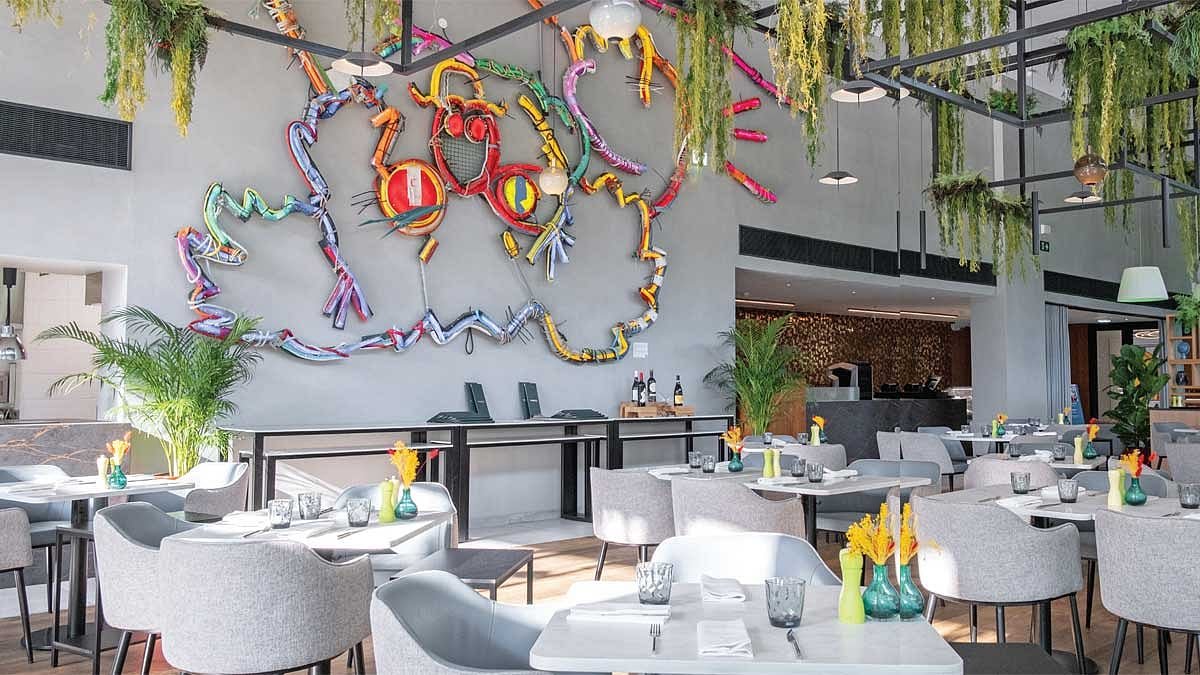
Next stop: the restaurant. As I helped myself to some yogurt and oatmeal, suspended dramatically above the breakfast platter was another Bordalo II creation–this time, a giant koala—assembled from repurposed hoses, rescued ropes, fishing nets, and plastics. Lighted Koala would transform into a flickering neon spectacle at night.
There was something almost ironic about its positioning. As the aroma of warm baguettes filled the room and guests returned for more servings of the unlimited buffet, excessiveness defined the space. In contrast, the koala stood as a subtle reminder of the waste generated by exaggerated consumption lifestyles.
[ad_2]
Source link

No Comment! Be the first one.