
[ad_1]
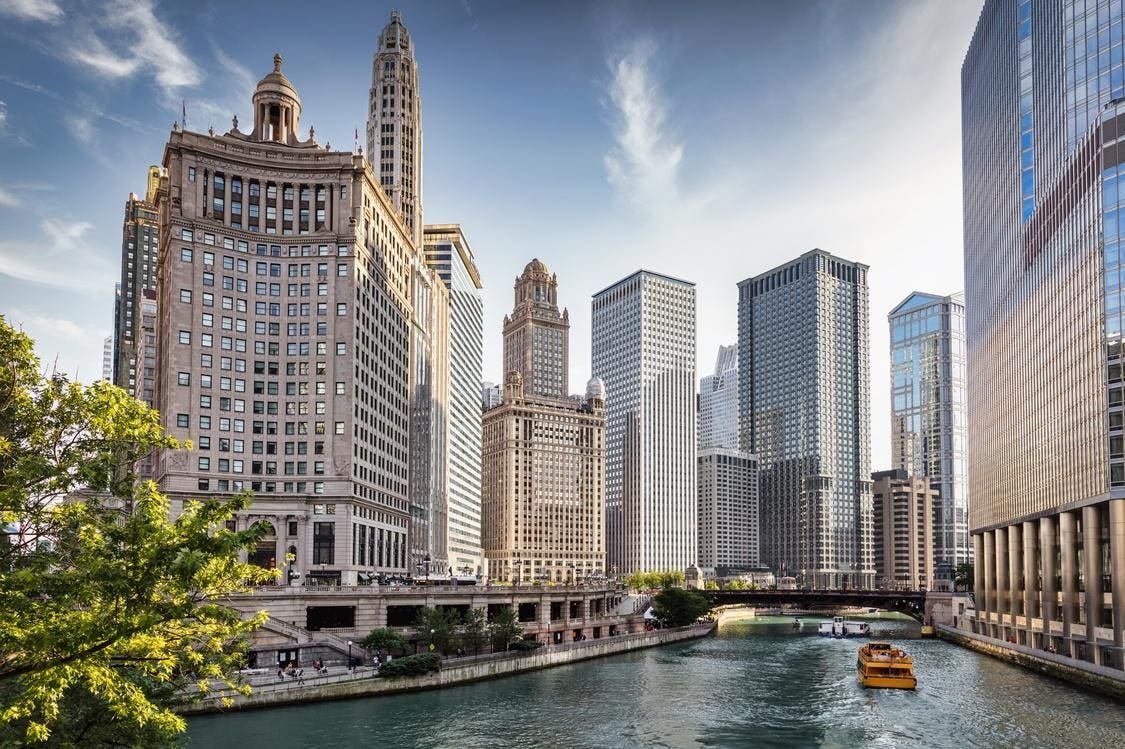
Downtown Chicago Skyscraper Cityscape along the Chicago River. Typical yellow Tourist Tourboat cruising on the Chicago River towards the Michigan Lake. Chicago, Illinois, USA, North America
getty
Get your walking shoes, CTA maps, and ride share apps primed and ready, Chicago’s throwing a party of art and architecture September 19 through 21, 2025. Over that weekend, the Chicago Architecture Biennial opens alongside Chicago Exhibition Weekend.
Across the city, dozens of cultural institutions will open their doors to new exhibitions and special events, galleries will stay open late, there’ll be talks and walks and music and cocktails. All activities are open to the public and most free of charge.
The great city of Chicago will show exactly how great it can be.
The Chicago Architecture Biennial
Since its founding in 2015, the Chicago Architecture Biennial, the largest exhibition of contemporary architecture in North America, has presented more than 500 projects representing over 40 countries, attracting more than two million visitors to what many in the field believe to be America’s greatest city for architecture. The world’s first skyscraper was built in Chicago, the Home Insurance Building, towering 10-stories.
That may not sound like much now, but it was a feat of architecture, engineering and construction when it was completed in 1885. Besting it by 100 additional stories, Willis Tower, formerly the Sears Tower, was also the tallest building in the world when it opened in 1973. It continues to be Chicago’s signature skyline silhouette and a favorite for visitors riding one of the world’s fastest elevators up to its viewing deck on the 103rd floor.
The city has long played a key role in shaping conversations on design, urban development, and the future of cities. From Louis Sullivan, Frank Lloyd Wright, and Ludwig Mies van der Rohe to Bertrand Goldberg, John Moutoussamy, Natalie Griffin de Blois, and contemporary spatial thinkers such as Jeanne Gang and Amanda Williams, Chicago’s architectural community has long exerted an enormous influence on the field.
“I studied architecture in Buenos Aires, Argentina where I’m from,” Florencia Rodriguez, Artistic Director of the sixth edition of the Chicago Architecture Biennial, told Forbes.com. “We would all study Chicago, wherever you are in the world.”
This edition explores how architecture engages with profound cultural, social, and environmental transformations shaping our world and explores the possibility of envisioning alternate paths forward. “SHIFT: Architecture in Times of Radical Change,” presents groundbreaking exhibitions, installations, and programming at iconic sites across the metropolitan area by more than 100 international architects, designers, and creative practitioners. Aligned with the Biennial’s mission, all programming will be free and open to the public.
“Architecture is for everyone,” Rodriguez said. “How can we breech conversations between the field, insular conversations within the field of architecture and the public, because we all live in cities and we all use architecture.”
Conversations about sustainable materials and design, climate resiliency, ethical sourcing of materials and labor, housing affordability and access, adaptive reuse, density. “SHIFT” convenes voices from around the world in a forum presenting a city-wide buffet of exhibitions, films, podcasts, dialogues, print and digital publications, and other public events. Together, these programs address urgent questions shaping the spaces we inhabit, demonstrating architecture’s role in shaping our collective future.
A hopeful future according to Rodriguez, who believes architecture and design are inherently optimistic disciplines.
“You’re always projecting possible futures,” she said. “When you find a problem, you’re thinking about projecting solutions and drawing ideas about how things could be. Architecture and design in general are listening, interpreting, and giving possibilities of how things could be.”
Unique perspective view of the world’s largest Tiffany glass-domed ceiling, centered by a Tiffany glass chandelier hanging from the dome itself. Located in the Preston Bradley Hall of the historic Chicago Cultural Center. Photo taken looking up from the center of the majestic hall.
getty
When visiting the Biennial, Rodriguez suggests starting at the magnificent Chicago Cultural Center which serves as the event’s de facto headquarters. Located within is the most thorough introduction to the Biennial and the greatest number of exhibitions designed to generate discussions and be used as examples for promoting new ideas in the field. From there, branch out to other host sites including the Graham Foundation, Stony Island Arts Bank, and the Griffin Museum of Science and Industry.
“Chicago is very complex, diverse, and interesting in how it puts together people from different backgrounds–immigrants–and that complexity is so rich; that is also something I value about Chicago,” Rodriguez said. “Being able to have different conversations, different approaches to culture and what a city needs to provide, and what a city should be in the future.”
Anyone visiting Chicago and interested in architecture within or beyond the Biennial should also visit the Chicago Architecture Center, right along the Chicago River. The city’s history and prominence in architecture is shared through exhibitions and programming. The organization also offers a wide variety of tours, including its popular architecture river cruises. Schedule one that finishes after dark to see the city’s buildings alive with light.
One last Chicago architecture tidbit to bore your friends with. Billionaire Illinois Governor J.B. Pritzker is the nephew of Jay Pritzker, founder of the Hyatt Corporation–best known for their hotels–and namesake of architecture’s premier annual award, the Pritzker Prize.
Chicago Exhibition Weekend
The flag of the city of Chicago
getty
The Chicago Architecture Biennial runs through February 28, 2026, allowing visitors to pace themselves. Chicago Exhibition Weekend is a sprint. Go for broke. Rest on Monday. And Tuesday.
Returning for its third annual edition, also September 19 through 21 to align with the Biennial, Chicago Exhibition Weekend (CXW) invites visitors to locations around town from prestigious museums to emerging art spaces. CXW acts as a counterpart to its springtime art fair partner, EXPO CHICAGO, connecting emerging and established artists, and fostering connections between galleries, collectors, and Chicago’s culturally curious.
CXW 2025 will be anchored by a centralized location, 400 N. Peoria Street, the site for CXW’s central exhibition, “Over My Head: Encounters with Conceptual Art in a Flyover City, 1984-2015.” This presentation examines Chicago’s oft-forgotten position as a nerve center for post-conceptual art in the late 20th and early 21st centuries and is on view, thankfully, through October 11, 2025.
The 400 N. Peoria Street site will also host CXW’s inaugural partnership with the Chicago Art Book Fair, presenting a scaled-down version of their main fair, highlighting emerging practices in art book publishing with work by independent presses, printmakers, arts publishers, zinemakers, and more.
All programming at 400 N. Peoria Street is free and open to the public.
CXW presents citywide programming with galleries and institutional venues on the North, South, East, and West Sides, reflecting the depth and diversity of Chicago’s arts and culture ecosystem. Collaborating institutions include the Art Institute of Chicago, the Renaissance Society, and the Poetry Foundation, among others. Collaborating galleries include Corbett vs. Dempsey, GRAY, Monique Meloche Gallery, PATRON, M.LeBlanc, Good Weather, and Mariane Ibrahim. These partners will present openings, extended hours, and special public events during CXW’s three-day span.
Seeing everything is impossible. Helping attendees sort through the overwhelm, CXW has enlisted local arts and culture leaders to present a series of curated routes, helping navigate the various events and participating sites. Each route consists of recommendations for galleries and cultural venues, but also restaurants and local businesses.
Either during CXW or after, put the National Housing Museum on your to-do list. Opened in April of this year, the Museum is the only of its kind interpreting the American experience through the lens of public housing.
The Museum is located in one of the Jane Addams Homes buildings constructed in the 1930s and will be hosting special CXW events. Addams founded America’s first settlement house and was a tireless crusader for a suite of progressive issues from housing to sanitation. The Jane Addams Hull House Museum, less than a mile away amidst the University of Illinois Chicago campus, is worth visiting as well. Admission there is free.
More From Forbes
[ad_2]
Source link
Other Articles


No Comment! Be the first one.