
[ad_1]
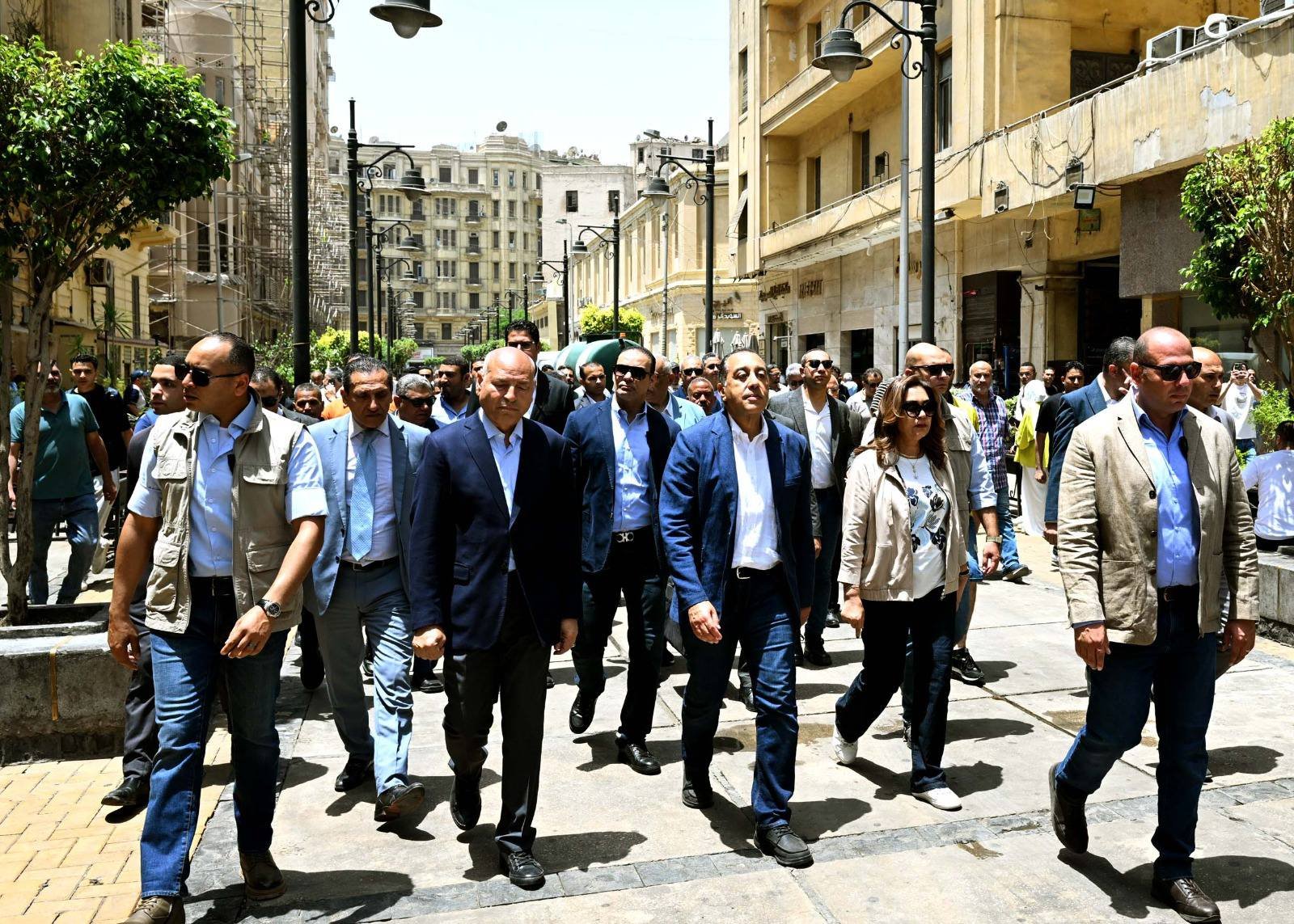
Egyptian Prime Minister Mostafa Madbouly conducted an extensive inspection tour across Cairo on Saturday to review projects aimed at revitalising historic districts and landmarks, as part of a broader government strategy to restore the architectural identity of Khedival and historic Cairo while improving the visual character of heritage areas.
Madbouly was accompanied by several ministers and senior officials, including Minister of Local Development and Environment Manal Awad, Minister of Tourism and Antiquities Sherif Fathy, Cairo Governor Ibrahim Saber, and Mohamed Abou Saada, Chairperson of the National Organization for Urban Harmony.
According to the Cabinet spokesperson, the tour focused on efforts to revive major streets in downtown Cairo under a comprehensive master plan designed to rehabilitate historic and Khedival Cairo and restore the district’s distinctive architectural and cultural identity.
The inspection also included newly opened traffic corridors intended to improve mobility and ease congestion between Cairo’s historic areas.
Madbouly said projects to revive historic Cairo are receiving strong government support and are being implemented at an accelerated pace alongside Egypt’s wider urban expansion and infrastructure agenda. He said the efforts reflect the state’s vision of achieving integrated urban development while preserving the capital’s historical character.
The prime minister began the tour by inspecting restoration works at Qasr al-Tahrir, the former headquarters of Egypt’s Foreign Ministry overlooking Tahrir Square. The building was originally constructed in 1907 as a palace for Princess Neamatallah, daughter of Khedive Tawfiq, and designed by Italian architect Antonio Lasciac.
Cairo Governor Ibrahim Saber said the project includes restoring the building’s facades, surrounding gardens and public spaces, in addition to installing modern lighting systems and rehabilitating mosaic and decorative marble elements to preserve the palace’s historical and architectural significance.
He added that the first phase of restoration works, covering facades overlooking the Arab League headquarters and the Semiramis InterContinental Hotel, has reached 95% completion, while the second phase is focused on the main facade facing Tahrir Square.
Deputy Foreign Minister for African Affairs Mohamed Abou Bakr noted that the palace became the official headquarters of Egypt’s Foreign Ministry in 1930 and hosted international delegations and diplomatic figures for decades, making it part of Egypt’s modern diplomatic history.
During the downtown tour, Madbouly also attended the launch of the “Art Street” initiative in the Bourse Triangle and Sherifein Street area, implemented in cooperation with Cairo Governorate and the Academy of Arts.
The Cairo governor said the initiative seeks to transform public spaces into open platforms for artistic expression through activities including painting, music, singing, dance, puppetry and caricature art. The programme aims to make arts more accessible while supporting emerging talent.
He added that the initiative forms part of the broader “Bridges of Creativity” strategy, which also includes the “Music and Arts Kiosk” project to host performances in parks and public gardens, alongside plans for a specialised centre dedicated to supporting and training young artists.
Madbouly observed a range of performances during the event, including ballet inspired by Russian, Italian and Spanish schools, as well as traditional Egyptian tahtib performances, tanoura dance shows and puppet theatre presentations involving dozens of young artists.
The prime minister also reviewed projects aimed at improving the visual identity of downtown Cairo through restoring historic facades, removing visual distortions, standardising commercial signage and upgrading pavements and lighting systems.
Saber said the third phase of redevelopment works, extending between Tahrir Square and Talaat Harb Square, has been fully completed after restoring the facades of 21 buildings. The fourth phase, extending toward 26th of July Street and covering 24 additional buildings, is currently underway.
The tour also included Al-Alfi Street, which has been transformed into a pedestrian cultural and tourism promenade following infrastructure upgrades, improved lighting and landscaping works, alongside a self-financing maintenance model managed by local stakeholders.
Madbouly further reviewed the redevelopment project for the Old Opera district, which includes redesigning the facades of the Opera Garage in a style inspired by the historic Cairo Opera House, as well as plans to convert the garage’s administrative building into a hotel to support tourism and investment activity in downtown Cairo.
Officials from the National Organization for Urban Harmony said restoration and urban rehabilitation efforts across Khedival Cairo will continue as part of a broader government plan to preserve the capital’s architectural heritage and historic identity.
[ad_2]
Source link
Other Articles

No Comment! Be the first one.