
[ad_1]
The Jesuits’ aversion to traditional values has found a new victim: iconography and Catholic art. This week, the National Catholic Reporter reported that Jesuit artist Fr Nicholas Leeper’s exhibition, “Twilight of the Idols”, was cancelled by the Sheen Center just two weeks before it would have opened to the public. Fr Leeper claims that he was disappointed and shocked by this cancellation. Upon reviewing his artwork, however, it is hard to see how.
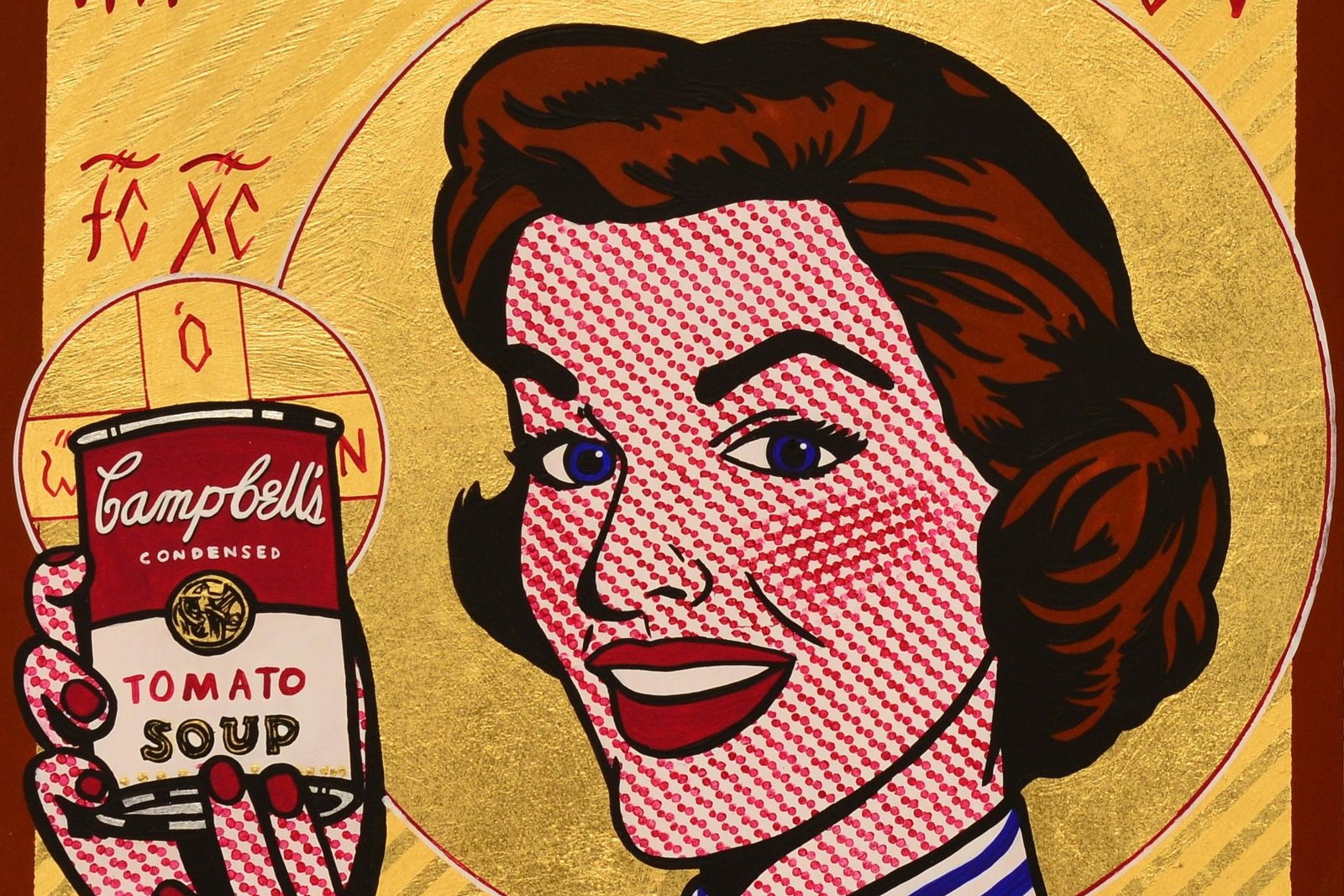
The exhibition is seemingly a critique of traditional forms of iconography, which Fr Leeper suggests border on idol worship. Images in the exhibition are supposed to represent Catholic saints and figures using “commercial advertising inside the structure of Byzantine icons”. The end result is unaesthetic imagery that waters down – if not denigrates – Catholic truths and figures. Instead of calling Catholics higher, showing them what they ought to aspire towards, Fr Leeper’s “icons” erroneously point viewers back towards earth.
For example, Fr Leeper’s “Madonna del Parto” depicts Hollywood sex icon and Playboy model Sharon Tate as a pregnant Virgin Mary. This shockingly blasphemous depiction was wholly unnecessary. Viewers are left wondering confusedly whether Fr Leeper is suggesting the possibility of Tate’s redemption through motherhood, or whether he is suggesting Mary was just another gal… like Tate.
Fr Leeper’s “Madonna and Child” similarly undermines the reverence owed to the Blessed Mother. In the image, “Mary appears as a smiling 1950s housewife from a Campbell’s soup advertisement, holding a can of tomato soup instead of the infant Jesus.” This uncomfortably equates Mary’s pivotal role raising God in her home with 1950s housewives – whom society has retroactively smeared as repressed, depressed and terrifyingly chipper thanks to drugs.
This depiction is especially questionable since liberal Americans and Jesuits have been among the harshest critics of the consumerist and overly aesthetic-focused “tradwives” era. Some have even argued that all women who prioritise children and the home are repressed. Instead of focusing on the beauty of Mary’s motherhood and home life, Fr Leeper’s image drags viewers downward with its focus on contemporary debates and politicised viewpoints.
Another image of “the Visitation” features Mary and her cousin Elizabeth… smoking cigarettes. This image is not inherently immoral. Neither is smoking. Yet once again, the artist’s implicit goal is to make viewers think: they are just like us.
At the very least in Mary’s case, she is really not. The Mother of God was born free from sin and should be viewed as a role model for holiness, virtue and truth. Implying that she is just another woman who would have engaged in American pop culture and “cool-girl” trends like smoking misses the mark of the biblical story and the purpose of art. Instead of uplifting viewers with inspiring images of what authentic friendship, motherhood and faithfulness mean, Fr Leeper’s image once again pulls viewers downward with its purely earthly focus.
Another of Fr Leeper’s images features the Holy Family. In the image, a woman stands next to a man holding a box of Brillo pads with a halo surrounding the box. In Fr Leeper’s own words, the Brillo pads’ depiction of Jesus “invites us to see Christ in consumerism and as a mass-produced product. He is the one who ‘shines’ and cleanses the dirty and stained; he is not a prize for the perfect.”
This nonsensical explanation makes the depiction of Jesus as a Brillo pad even more ridiculous. Encouraging viewers to contemplate the Son of God and Lord of the Universe as a mere Brillo pad once again feels like Fr Leeper is watering down eternal truth and beauty to please an earthly audience rather than using authentic beauty for conversion.
Of course, Fr Leeper defends his work as an attempt to find God in all things. He accuses critics of idolatry for preferring traditional depictions of the saints over Brillo-pad Jesus.
“When we look at those things and think that’s the only way our Church should look… we’re kind of becoming idolaters in a certain sense,” Fr Leeper told the National Catholic Reporter. “We’re worshipping the thing rather than God.” Unfortunately for Fr Leeper, this excuse and accusation simply do not hold up.
The truth is twofold: number one, Fr Leeper’s provocative depictions can be boiled down to a very untalented person’s sole shot at five minutes of fame. Secondly, nobody is saying that there is only one way to depict the saints. The issue with Fr Leeper’s work is not that he is depicting them differently – it is that some of his irreverent depictions border on outright blasphemy, while others are not even clearly religious.
Upon viewing Fr Leeper’s visual atrocities, I couldn’t help but think of the saying: shoot for the moon – even if you miss, you will land among the stars. All too many of today’s Jesuits seem obsessed with shooting for the earth instead. Abandoning tradition often results in the watering down of pivotal truths of the Faith, or attacks on beauty, in an effort to make them more amenable to the ever-changing whims of human nature.
Fr Leeper could have used objective beauty and reverent images to call people higher, to the contemplation of eternal truths. That is what many great artists have done – the power of authentically beautiful artwork in uplifting souls to God is precisely why how we depict things matters. “Shooting for the moon” artistically helped many greats inspire their contemporaries to look upward. God seems to have rewarded them by uplifting their artwork and celebrity across generations.
Fr Leeper’s exhibition sacrifices truth and beauty in a desperate ploy to appear relatable. History is more likely to find it forgettable.
[ad_2]
Source link
Other Articles


No Comment! Be the first one.