
[ad_1]
It thus fell to Mucha to produce a poster — one that became a sensation. Parisians woke up in awe on New Year’s Day 1895 to see it plastered across their city. Apparently, half of the posters had been removed from their hoardings by nightfall.
Bernhardt is depicted as the titular heroine, Gismonda, in long brocaded robes, her hair an effusion of flowers. She holds a palm branch so large it covers the first half of her name, which is written in a halo-like arch above her head.
With its subtle colours and slender vertical shape, Mucha’s design marked a radical departure from customary posters (which tended to be brashly coloured and square).
Bernhardt loved it, instantly offering Mucha a six-year contract to design posters, stage sets and costumes for her productions. She wasn’t the only person to covet his services. Mucha became a highly successful figure in advertising, producing posters to sell bicycles, perfume, brandy, soap, champagne, chocolate and more.
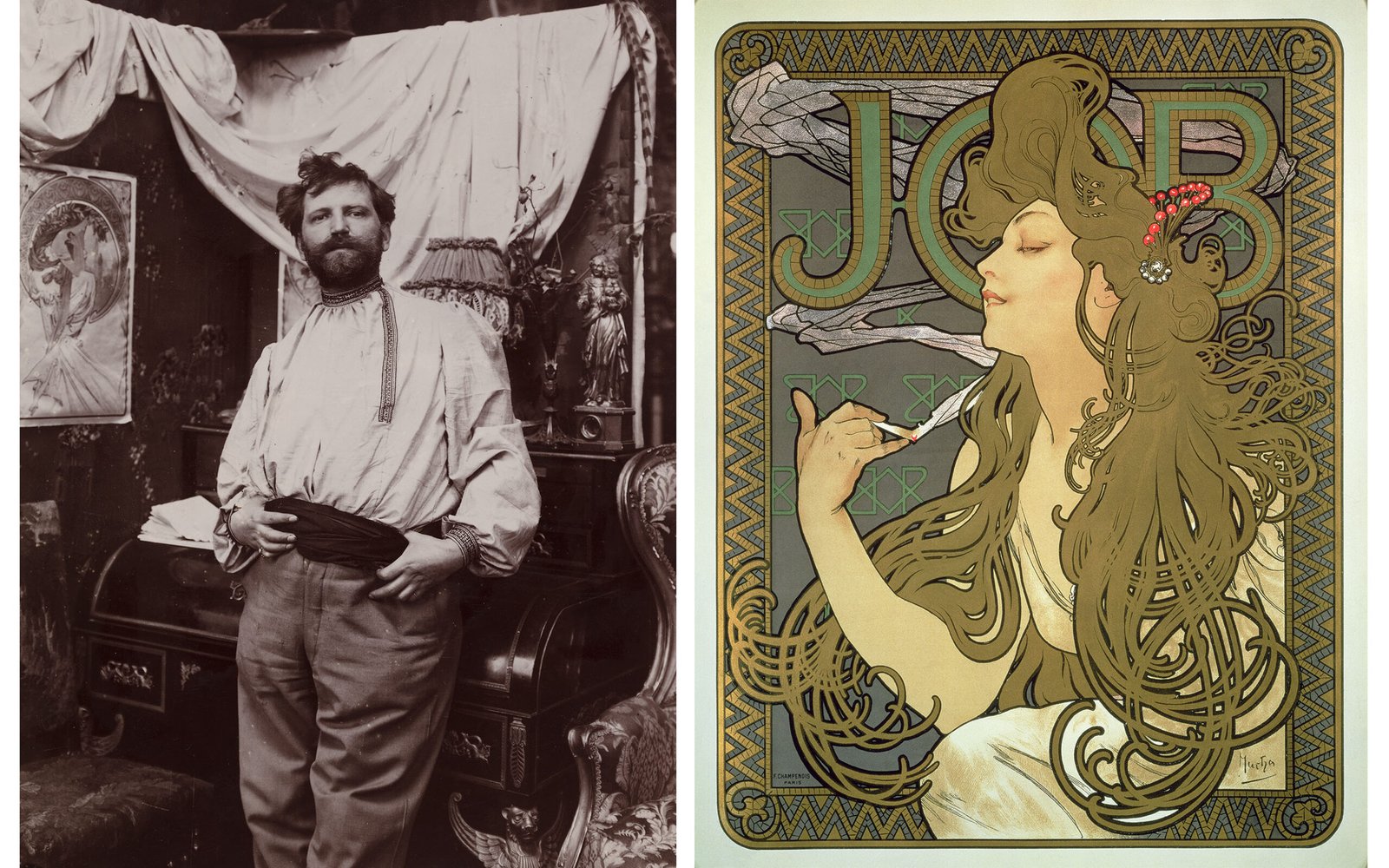
In perhaps his most famous advert, for JOB cigarette papers, the artist put less emphasis on the item being sold than on the woman whose cigarette smoke envelops her in sensual abandon. With his hypnotic work from this time, Mucha helped bring the new style of Art Nouveau to its apogee — his JOB image in many ways epitomising it, from the sinuous lines, organic forms and pastel palette, to the wealth of floral details and the seductive woman with luxuriant hair.
[ad_2]
Source link

No Comment! Be the first one.