
[ad_1]
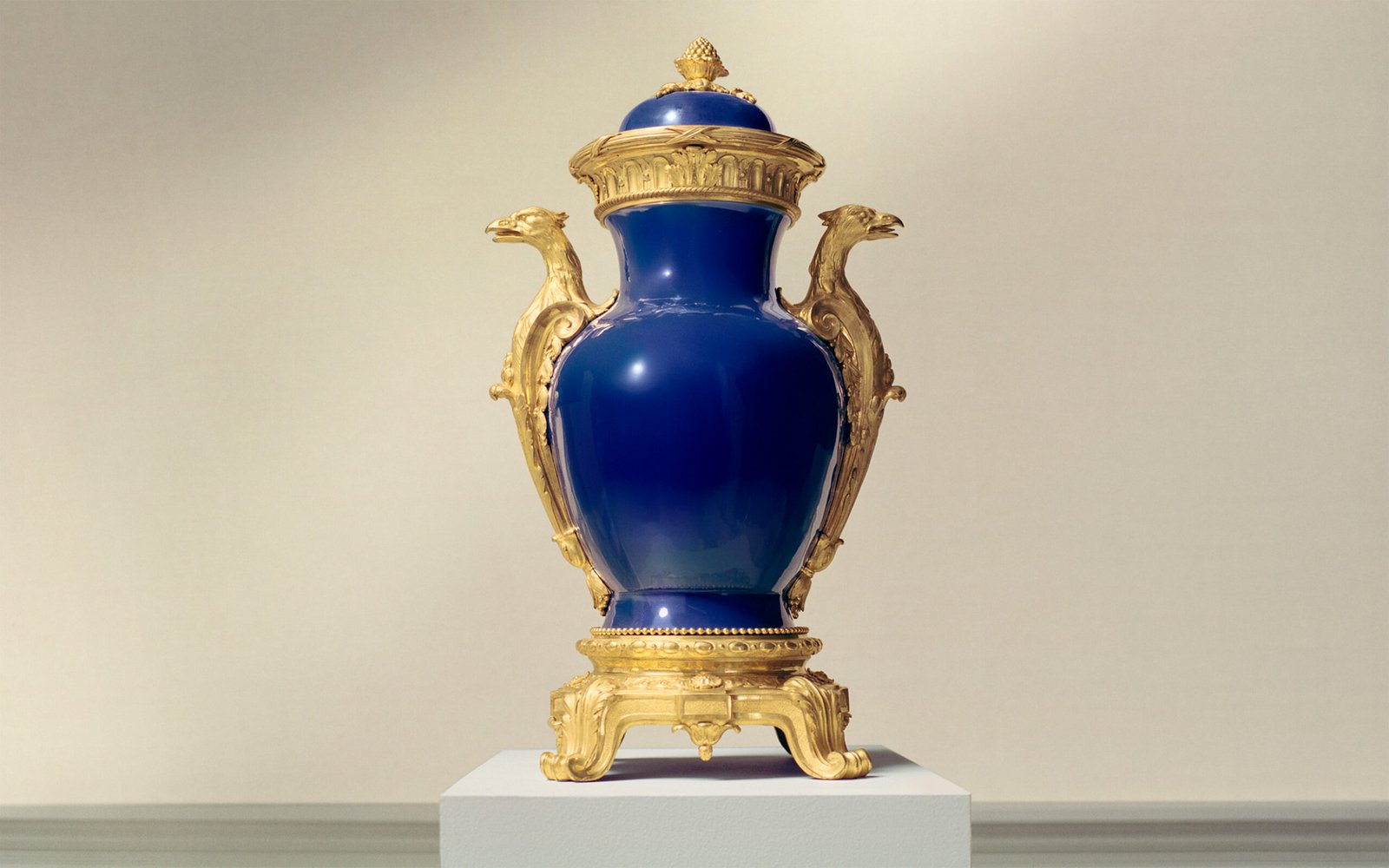
Among the uppermost echelons of society in 18th-century France, a new taste emerged for adorning rare and beautiful objects with elaborate gilded bronze forms known as ‘ormolu’.
These sculptural additions were created thanks to the collaboration between the guilds of casters, chasers and gilders, overseen by influential marchands-merciers — figures unique to France, who were not only importers of decorative arts, but also designers, dealers and tastemakers.
The process transformed clocks, lighting fixtures, furniture, hardstone objects and Chinese ceramics into a new genre of luxury item coveted by collectors for their salons and Schatzkammern, or treasure rooms.
‘Many earlier hardstone pieces in great collections were mounted in gold, silver and silver gilt,’ says European Furniture and Works of Art specialist Benjamin Berry. ‘Ormolu mounts, which came as a sort of evolution of this practice, represent the pinnacle of skill and technology at the time, and were incredibly laborious to produce. They are among the greatest achievements of the French decorative arts industry.’
In The Exceptional Sale at Christie’s in London on 1 July 2025, lots on offer will include a dazzling trio of ormolu-mounted objects that have passed through the hands of some of Europe’s greatest collectors, from courtiers and earls to dukes, tsars and princes. Here, Berry unravels their fascinating histories.
Lapis lazuli, which comes from the mines of Sar-e-Sang in Afghanistan, has been prized since antiquity for its it deep blue tones and glistening seams of gold.
This shallow wine dish, known as a tazza, was carved from a block of lapis around 1600, possibly in a Mughal court, but more likely in Rome, Milan or Florence, where similar objects were being commissioned by the Medici family. Its scale — it is 26.5 centimetres wide — and depth of colour make it incredibly rare, if not unique.
It’s the sort of object that was highly prized by Louis XIV. To put its value in context, the king’s collection of more than 700 hardstone objects included just 14 pieces of lapis, and the majority were small cups less than 15 centimetres in diameter. The only comparable example he owned was the famous ‘Grande Nef’, now in the Louvre.
The tazza coming to Christie’s is first documented in 1777, where it is listed with different mounts in the sale of property belonging to the royal financier Pierre-Louis-Paul Randon be Boisset. Randon de Boisset was one of the most famous French collectors of his day. He lavished his fortune on paintings by Boucher, Murillo, Rubens and Rembrandt, and at one point spent 15 months on a spree in Italy, where he may have acquired this tazza.
[ad_2]
Source link


No Comment! Be the first one.