
[ad_1]
Nan Goldin made her name capturing people in bedrooms and bathrooms, with harsh on-camera flash and unflinching honesty. But when her next exhibition opens at the Hayward Gallery this November, it won’t center around the kind of intimate documentary work she’s known for.
Titled You Never Did Anything Wrong, the new show sees Goldin turn her camera towards classical sculpture, old master paintings and elaborate still-lifes; fusing her snapshot aesthetic with centuries of art history. And for some of her followers, this might come as a bit of a shock.
Since the 1970s, Goldin has been building what she calls “a record of my life that no one can revise”. Her best-known work, The Ballad of Sexual Dependency, documented New York’s queer subculture with a stark, flash-lit approach that changed photography forever. But in this new work, made over the past decade, she’s shooting Bernini’s marble sculptures and arranging flowers like a Dutch master. Quite the turnaround.

It’s a great example of how the healthiest practices evolve over time. Goldin could have carried on doing the same thing forever, and no one would have complained. Instead, she’s decided to step out of her comfort zone, and do something strikingly different. Having spent decades perfecting a visual language based on unmediated experience, she’s now turning that language toward objects specifically created to be looked at.
Sculpture meets snapshots

Goldin built her reputation on available light and flash in domestic spaces, capturing moments as they happened. But marble doesn’t move, doesn’t breathe, doesn’t react to your presence. It demands you bring the emotion rather than finding it already there.
In works like Marble Quartet (2013) and the recent Hermaphrodite series, Goldin applies her signature saturated color palette and intimate framing to classical sculptures. The results are neither straight documentation nor artistic reinterpretation. They’re photographs that acknowledge both the subject and Goldin’s trademark visual vocabulary, creating a strange kind of conversation across the centuries.


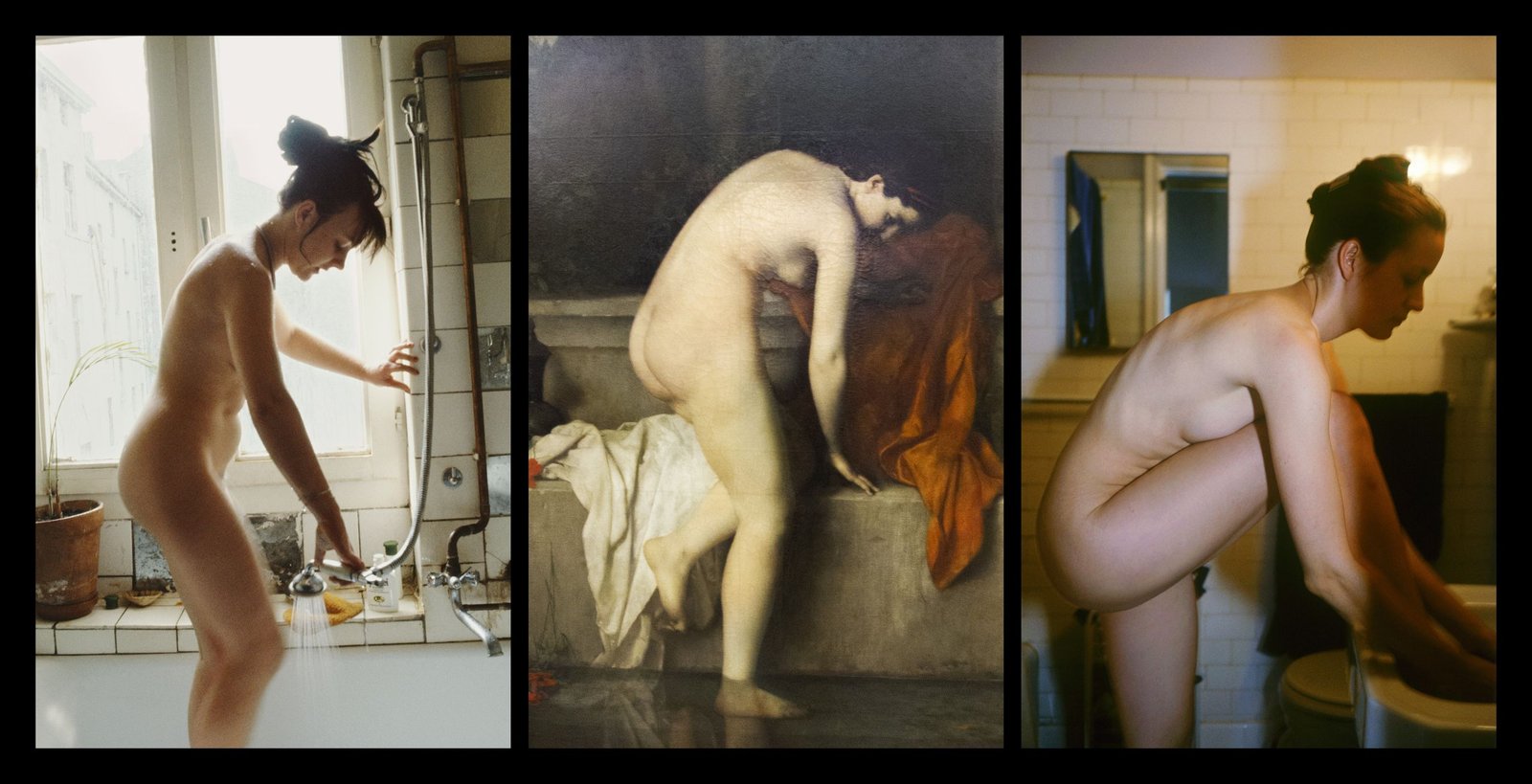
Her Death of Orpheus series takes this further, pairing old master paintings with contemporary shots that echo them. It’s not about pastiche, more recognition. These stories of love of loss have always been her subjects; she’s now just found a new way of visually expressing them.
Perhaps the most surprising thing is Goldin’s embrace of the still life. Flowers with cup and Gaja, for instance, shows elaborate arrangements that reference Dutch and Flemish painting traditions. Of course, Goldin’s documentary work was always about arrangement, about choosing what to include in the frame and what to leave out. The difference now is that she’s constructing the scene before photographing it.
The technical approach, though, remains consistent: rich color, careful attention to light quality, compositions that feel both casual and precisely controlled. Whether shooting a friend in bed or a vase of flowers on a table, her eye for emotional resonance in visual details hasn’t changed.


The lesson here isn’t that every documentary photographer should start shooting sculpture. It’s that photographic practice can deepen and expand without abandoning what made it powerful in the first place. The point is, Goldin hasn’t rejected her documentary roots. She’s simply found new visual ways to explore the same themes of intimacy, mortality and the need for connection.
The exhibition’s title comes from a photograph of a pet gravestone in Lisbon, Portugal. “You never did anything wrong,” reads the inscription; a statement of unconditional love that might stand as Goldin’s artistic manifesto. Whether photographing friends or marbled gods, her work embodies the same fundamental generosity; the same insistence on finding beauty in vulnerability.
For established photographers wondering where to go next, there’s inspiration in watching someone refuse to coast on past achievements. After 50 years, Goldin’s still experimenting, still finding new subjects, still pushing herself.
Nan Goldin: You Never Did Anything Wrong is at Hayward Gallery, Southbank Centre, London, from 24 November to 7 March 2027.
[ad_2]
Source link


No Comment! Be the first one.